
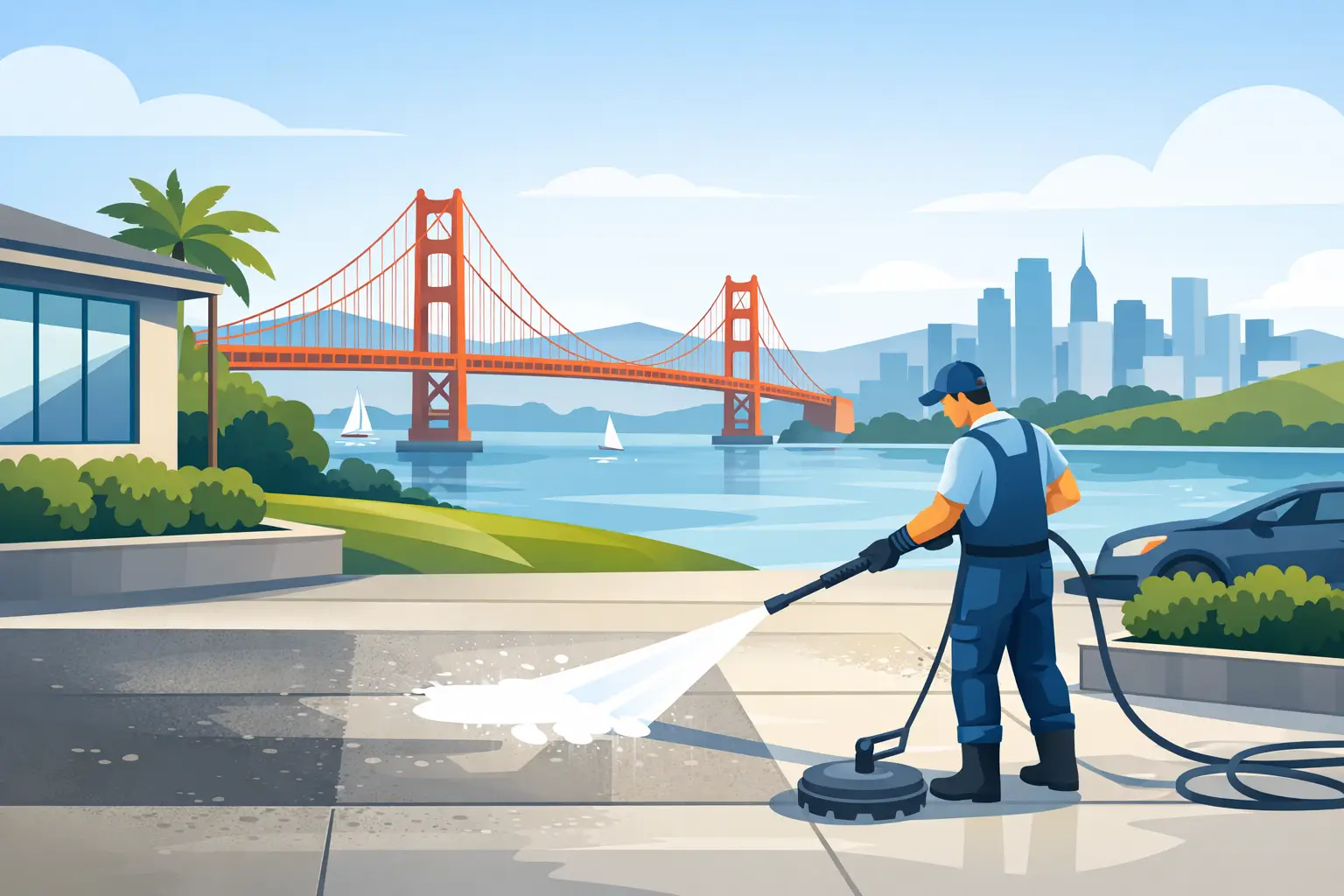
A darkened driveway, slick apartment walkway, or stained storefront entry sends a message before anyone reaches the door. In the Bay Area, concrete cleaning is not just about making a property look better for the weekend. It is a practical way to remove buildup that affects traction, curb appeal, surface life, and the day-to-day impression your home or business makes.
Concrete is tough, but it is not invincible. Its porous surface collects dirt, vehicle fluids, algae, mildew, rust, food spills, gum, and airborne grime. Oakland fog, San Francisco moisture, shade from mature landscaping, and busy commercial foot traffic can all speed up that buildup. The right cleaning method restores the surface without creating the etching, streaks, or damage that come from treating every stain with maximum pressure.
Why Concrete Gets Dirty So Fast in the Bay Area
Concrete has tiny pores that hold moisture and contaminants below the surface. A quick rinse may remove loose dirt, but it often leaves the material that causes discoloration behind. That is why a driveway can look clean while dry, then show dark spots again after the next damp morning.
Moisture is a major factor. Areas that stay shaded by buildings, fences, trees, or parked vehicles are more likely to develop algae, moss, mildew, and organic staining. These growths can make walkways slippery, especially near front entries, pool areas, garbage enclosures, and multi-unit properties.
Driveways face a different set of problems. Tire marks, leaked oil, brake dust, leaf tannins, and rust stains can settle into the concrete over time. On commercial sites, sidewalks and loading areas also collect gum, food grease, spills, and heavy foot traffic grime. Each stain responds differently, which is why one-size-fits-all pressure washing is rarely the best answer.
Concrete Cleaning Is About Protection, Not Just Appearance
A bright sidewalk or driveway delivers an immediate visual transformation. It makes landscaping look sharper, storefronts more inviting, and the whole property more cared for. But the value goes further than curb appeal.
Removing organic buildup helps reduce slick conditions on walking surfaces. That matters for homeowners welcoming guests, landlords maintaining common areas, and business owners responsible for customer entrances. Clean, visible concrete also makes it easier to spot cracks, drainage issues, and areas that may need repair before they become larger maintenance problems.
Routine cleaning can also reduce the time contaminants spend sitting on the surface. Oil, grease, decaying leaves, and moisture do not always cause instant damage, but long-term exposure can contribute to stubborn discoloration and surface deterioration. Concrete cleaning will not fix structural cracking or failed concrete, but it can help protect a sound surface from avoidable neglect.
For property managers, the difference is especially clear. Clean walkways, breezeways, dumpster pads, and parking areas support tenant satisfaction and help a property feel professionally maintained. For storefronts, a clean entry is part of the customer experience. People notice the details, even if they do not say so.
The Right Method for Each Concrete Stain
Effective concrete cleaning starts with identifying what is on the surface. A technician should inspect the concrete, note its condition, test the stain type, and choose a cleaning approach that fits the job. High pressure has its place, but pressure alone does not remove every problem.
Organic Growth and Dark Mildew
Algae, mildew, moss, and dark biological staining need more than a surface blast. A professional-grade treatment helps break down the growth at its source, followed by controlled rinsing. This approach produces a more even result and helps avoid the striped appearance that can happen when pressure is used inconsistently.
Oil, Grease, and Tire Marks
Oil stains are among the most common driveway complaints. Fresh spills are easier to treat than stains that have been baking into concrete for years, but even older marks can often be improved with the right degreaser, dwell time, agitation, and hot-water or pressure-washing process where appropriate.
Results depend on the age of the stain, the concrete’s finish, and whether the surface has been sealed. Honest service means setting expectations: deep oil penetration may leave a faint shadow, even after professional treatment. The goal is major improvement without damaging the concrete in pursuit of an unrealistic perfect-white finish.
Rust, Mineral Deposits, and Irrigation Stains
Orange rust marks from metal furniture, tools, and irrigation can be surprisingly stubborn. Mineral deposits may also form where water repeatedly runs across the surface. These stains often require specialized cleaners rather than extra pressure. Using the wrong chemical can discolor concrete or harm nearby landscaping, so careful product selection and controlled application matter.
Gum, Food Spills, and Commercial Grime
Busy sidewalks and retail entrances need a process built for volume and consistency. Gum removal, grease treatment, and surface cleaning may be combined to restore a cleaner path of travel without disrupting business more than necessary. Flexible scheduling is valuable here, particularly for restaurants, storefronts, apartment communities, and facilities that need cleaning outside peak hours.
Why Surface Cleaners Beat Wand-Only Washing
A pressure-washing wand is useful for edges, corners, stains, and detailed work. But using only a wand across a large driveway or sidewalk can leave uneven lines known as tiger striping. It also takes longer and can create a patchy result when the operator’s distance or speed changes.
For broad, flat areas, commercial surface-cleaning equipment provides more consistent coverage. It keeps water pressure controlled at a uniform distance from the concrete while containing overspray better than an open wand. The final rinse still matters, as does detailed work along curbs, steps, walls, and drainage areas.
The trade-off is simple: more pressure is not automatically better. Old concrete, damaged areas, weak mortar, decorative finishes, and nearby painted surfaces need extra care. Skilled technicians adjust pressure, cleaning agents, and tools to the material in front of them instead of forcing the same method onto every property.
When to Schedule Professional Concrete Cleaning
Most residential driveways and walkways benefit from professional cleaning every 12 to 18 months. Homes with deep shade, frequent leaf drop, active irrigation overspray, or visible algae may need service more often. A quarterly or semiannual maintenance schedule can make sense for high-traffic commercial walkways, multi-family properties, restaurant exteriors, and locations with recurring grime.
Do not wait until the concrete is nearly black to schedule service. Early cleaning is generally faster, more effective, and easier on the surface. It also gives you a chance to address drainage or landscaping issues that keep feeding the problem.
Spring is a popular time to refresh outdoor spaces, but there is no single perfect season in the Bay Area. Before listing a home, welcoming tenants, reopening a patio, hosting an event, or preparing a storefront for a busy period are all smart times to clean. Property maintenance works best when it is planned around real needs, not just a calendar date.
What to Do Before and After Service
Before a professional crew arrives, move vehicles, furniture, planters, and other items from the work area when possible. Let the team know about known oil leaks, fragile edges, drainage concerns, painted concrete, or previous sealers. Clear communication helps the job move quickly and protects the areas around the concrete.
After cleaning, allow the surface to dry fully before judging the final color. Wet concrete often appears darker, and some deep stains may become easier to evaluate after drying. Keep vehicles off the driveway until the crew advises it is ready, particularly if stain treatments or a protective sealer have been applied.
Sealing can be worth discussing after a deep clean, especially for driveways, patios, and commercial concrete exposed to spills. A quality sealer may help reduce future absorption and make routine cleanup easier. It is not a permanent shield, though. It needs proper surface preparation and periodic renewal to perform as intended.
Get a Cleaner Surface Without the Guesswork
DIY cleaning can handle light dirt, but rental equipment, harsh chemicals, and high pressure can turn a simple job into etched concrete, damaged landscaping, or uneven stripes. For extensive staining, slick growth, commercial traffic areas, or concrete that has not been cleaned in years, professional service brings the right equipment and a safer process to the job.
Blast Off Now Pressure Washing helps Bay Area property owners restore driveways, sidewalks, walkways, patios, and commercial concrete with attention to the details that affect the finished result. Licensed, insured technicians can assess the surface, explain the approach, and provide a clear estimate before work begins.
A cleaner concrete surface changes how a property feels the moment someone arrives. Schedule service before buildup becomes the first thing people notice – and give your driveway, sidewalk, or entry the clean, cared-for finish it deserves.