A stained walkway changes the way a property feels before anyone reaches the front door. Dark algae near an entry, rust-colored drip marks under a planter, or an oil trail beside a garage can make an otherwise well-kept Bay Area home or business look neglected. Knowing how to clean stained concrete walkways means more than turning a pressure washer toward the surface. The right method removes the stain without etching the concrete, forcing contaminants deeper, or damaging nearby landscaping.
For homeowners, landlords, and commercial property managers, a clean walkway also supports safer footing, stronger curb appeal, and a better first impression for guests, tenants, and customers. Here is the practical approach that delivers a visible restoration while protecting the concrete underneath.
Start by Identifying the Concrete Stain
Concrete is porous. Dirt, moisture, oils, minerals, and organic growth can settle into tiny openings below the surface, which is why a quick rinse often leaves a shadow behind. Before choosing a cleaner or pressure setting, identify what caused the discoloration.
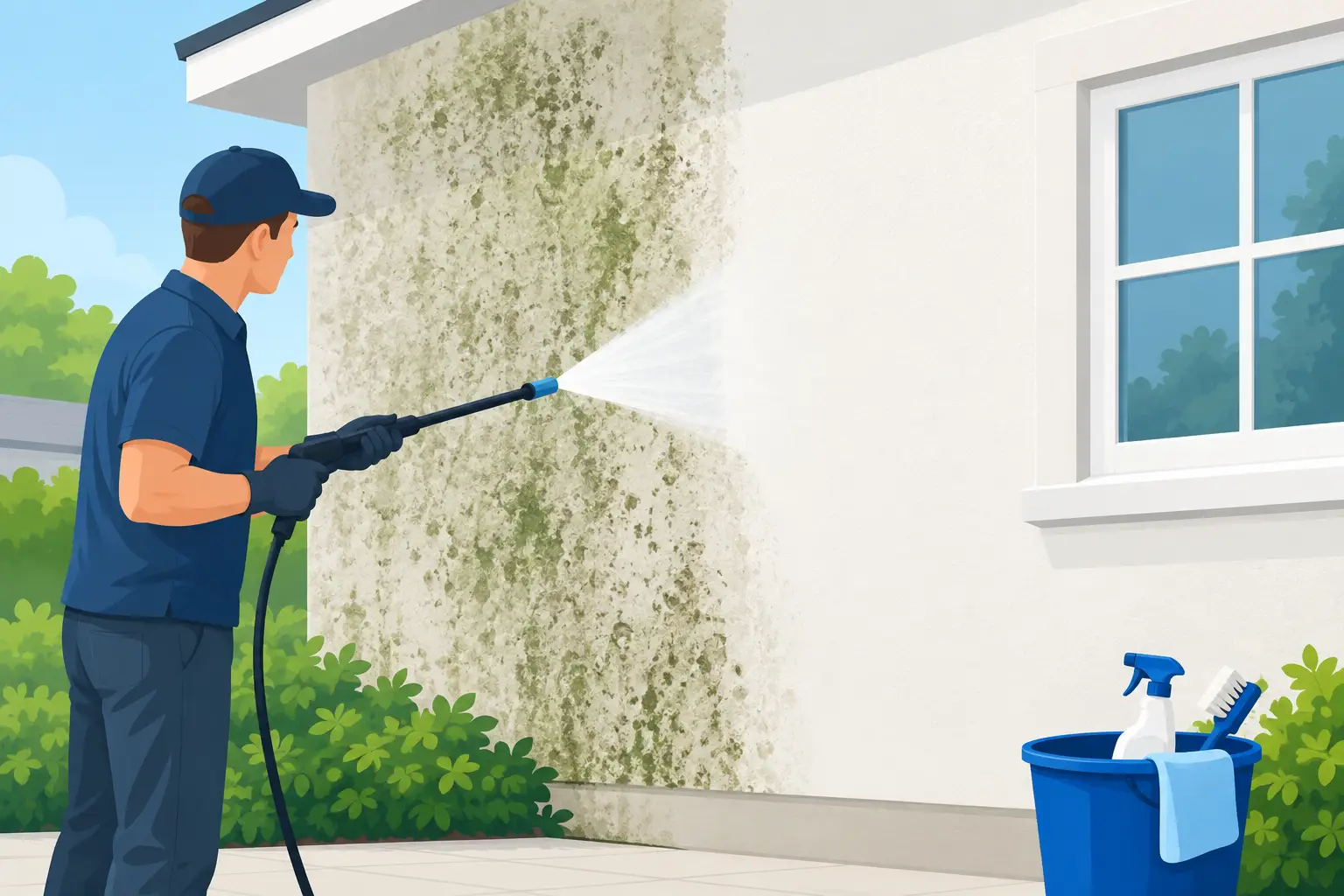
Green or black staining is usually algae, mildew, moss, or mold growth. It is common in shaded areas, along north-facing walkways, near sprinkler overspray, and in damp Bay Area microclimates. These stains can become slick when wet, creating a real slip concern around entrances and common areas.
Brown, orange, or reddish stains often point to rust. Metal furniture, irrigation water with mineral content, old tools, and leaking fixtures can all leave rust marks. Rust needs a targeted treatment. High pressure alone may lighten it but rarely removes it completely.
Dark spots around driveways, garage entries, dumpsters, and loading areas are commonly oil or grease. These stains can penetrate deeply, especially if they have been sitting through warm weather. Gum, paint, food spills, leaf tannins, fertilizer, and pet stains each call for a different cleaning approach as well.
Treating every stain with the same strong chemical or maximum pressure is where many concrete-cleaning jobs go wrong. A professional assessment saves time and helps avoid permanent surface damage.
How to Clean Stained Concrete Walkways Step by Step
Clear and Protect the Area First
Move furniture, planters, bins, doormats, and loose debris off the walkway. Sweep thoroughly so grit does not become abrasive during washing. Cover or rinse down sensitive plants nearby, and make sure runoff will not carry cleaning solution toward storm drains, garden beds, or neighboring property.
For storefronts and multi-unit buildings, schedule the work around foot traffic. Wet concrete, hoses, and active cleaning areas need clear access control. A clean result is not worth creating an avoidable safety issue for a resident or customer.
Pre-Treat Instead of Relying on Pressure Alone
Apply a concrete-safe cleaner that matches the stain type and allow it time to work. For organic growth, a professional-grade treatment breaks down algae and mildew before surface cleaning. For oil, a degreaser helps lift contamination from the pores. Rust removers are formulated differently and should be used carefully according to the product direction.
Dwell time matters. If cleaner is rinsed off immediately, it has little opportunity to loosen the stain. If it dries on the surface, it can leave residue or uneven results. Keep the treatment controlled and work in manageable sections, especially on warm or sunny days.
Avoid mixing cleaning chemicals. Bleach, acids, ammonia-based products, and unknown household cleaners can create dangerous reactions or harm surrounding materials. Strong acid products are also risky on concrete because they can roughen the finish, expose aggregate, and leave the walkway more vulnerable to future staining.
Use the Right Pressure and Equipment
Pressure washing can restore concrete fast, but more pressure is not automatically better. Excessively aggressive washing can leave visible wand marks, strip a decorative finish, damage aging concrete, and create uneven light and dark patches. This is especially noticeable on smooth sidewalks, colored concrete, stamped surfaces, and older walkways with previous repairs.
A surface cleaner is often the best tool for broad, flat concrete. It keeps water pressure moving evenly across the walkway and reduces the striping that can happen with a handheld wand. Edges, corners, and detailed areas may need careful wand work at an appropriate distance and angle.
For routine dirt and organic buildup, the goal is controlled, even cleaning. For deep grease or embedded discoloration, the process may require repeated treatment rather than a higher pressure setting. That trade-off protects the slab while producing a more consistent finish.
Rinse Completely and Inspect in Natural Light
After cleaning, rinse away loosened soil, chemical residue, and dirty runoff. Pay attention to expansion joints, edges, steps, and transitions where grime collects. A walkway can look clean while wet but reveal missed staining as it dries, so inspect it again in natural light.
Some old oil, rust, or tannin stains may improve significantly without disappearing in one visit. That does not necessarily mean the cleaning failed. It may mean the stain has penetrated deeply or chemically changed the concrete. A second targeted treatment can be safer and more effective than trying to force a full removal in one pass.
When DIY Cleaning Is Enough and When to Call a Pro
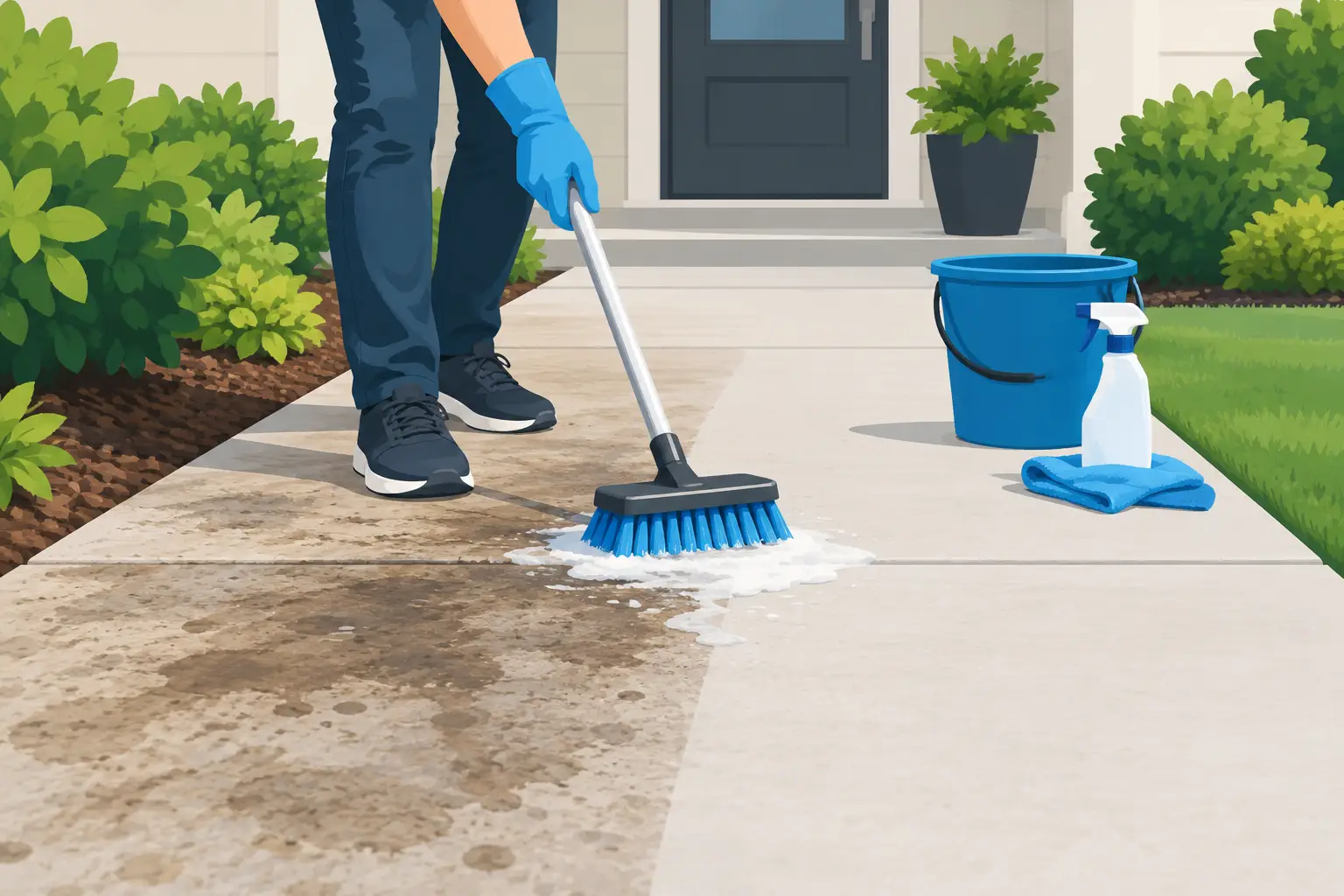
A homeowner can often handle light dirt, surface algae, and fresh spills with a suitable cleaner, a stiff nylon brush, and a careful rinse. Small areas with no decorative finish and no serious staining are reasonable DIY projects if you understand your equipment and protect nearby surfaces.
Professional service is the smarter call when the walkway has widespread black growth, heavy oil, recurring rust, paint or graffiti, uneven previous pressure-washing marks, or delicate adjacent materials. It is also a practical choice for property managers who need consistent results across long sidewalks, tenant entries, courtyards, parking areas, or storefront approaches.
Commercial-grade equipment matters, but technique matters just as much. A trained crew knows when to soft wash, when to use controlled pressure, how to apply eco-conscious detergents, and how to manage water and runoff responsibly. That helps preserve concrete while restoring the clean, cared-for appearance people notice immediately.
Blast Off Now Pressure Washing serves properties across Oakland, San Francisco, and the broader Bay Area with cleaning methods selected for the actual surface and stain, not a one-setting-fits-all approach. Licensed, insured service also gives owners and managers confidence when the job involves public walkways, large commercial areas, or high-visibility entrances.
Prevent Walkway Stains From Coming Back
The most cost-effective concrete cleaning plan is regular maintenance before stains become embedded. Sweep leaves and debris before they break down and leave tannin marks. Address oil leaks and spills quickly with an absorbent material followed by appropriate degreasing. Redirect sprinklers that constantly wet the same section of concrete, and trim back vegetation that traps shade and moisture.
For properties with frequent foot traffic or tree cover, quarterly exterior cleaning can keep organic buildup from becoming a larger restoration project. The right frequency depends on shade, irrigation, traffic, nearby construction, and whether the property is residential or commercial. A sunny front path may need occasional attention, while a damp apartment walkway may need a more regular schedule.
Concrete sealers can also help reduce absorption after the surface is fully cleaned and dry. Sealing is not a cure for every stain, and it requires proper prep, but it can make future cleanup easier on walkways exposed to spills, moisture, and heavy use.
A clean walkway sends a simple message: this property is cared for. Whether you are preparing a home for guests, protecting tenant satisfaction, or keeping a business entrance sharp, prompt attention to stains prevents small surface problems from becoming lasting eyesores.