A few green or black marks on siding can make an otherwise well-kept property look neglected fast. If you are searching for how remove mildew from exterior walls, the right answer depends on what the wall is made of, how widespread the growth is, and whether moisture is still feeding the problem. Clean it correctly, and you restore curb appeal while helping protect the exterior beneath it.
Mildew is usually less aggressive than mold, but it should not be ignored. On Bay Area homes and commercial buildings, fog, shaded walls, tree cover, sprinkler overspray, and winter moisture can create the damp conditions it needs. Left in place, mildew can stain paint, cling to textured stucco, make walkways nearby slippery, and contribute to premature wear on wood and some siding finishes.
How to Remove Mildew From Exterior Walls Without Damage
The goal is not simply to blast away visible discoloration. Effective exterior cleaning removes organic growth at the source while using the pressure, detergents, and rinse process that fit the surface. Too much pressure may scar stucco, force water behind siding, strip paint, or damage old mortar. Too little cleaning power can leave spores behind and allow the stains to return quickly.
Start by identifying the wall material. Vinyl siding, painted fiber cement, brick, stucco, wood, and composite panels all respond differently to water pressure and cleaning solutions. A soft-wash approach is generally the safer choice for painted surfaces, delicate siding, stucco, and older exterior finishes. This method applies a properly diluted cleaning solution at low pressure, gives it time to work, then rinses the wall carefully.
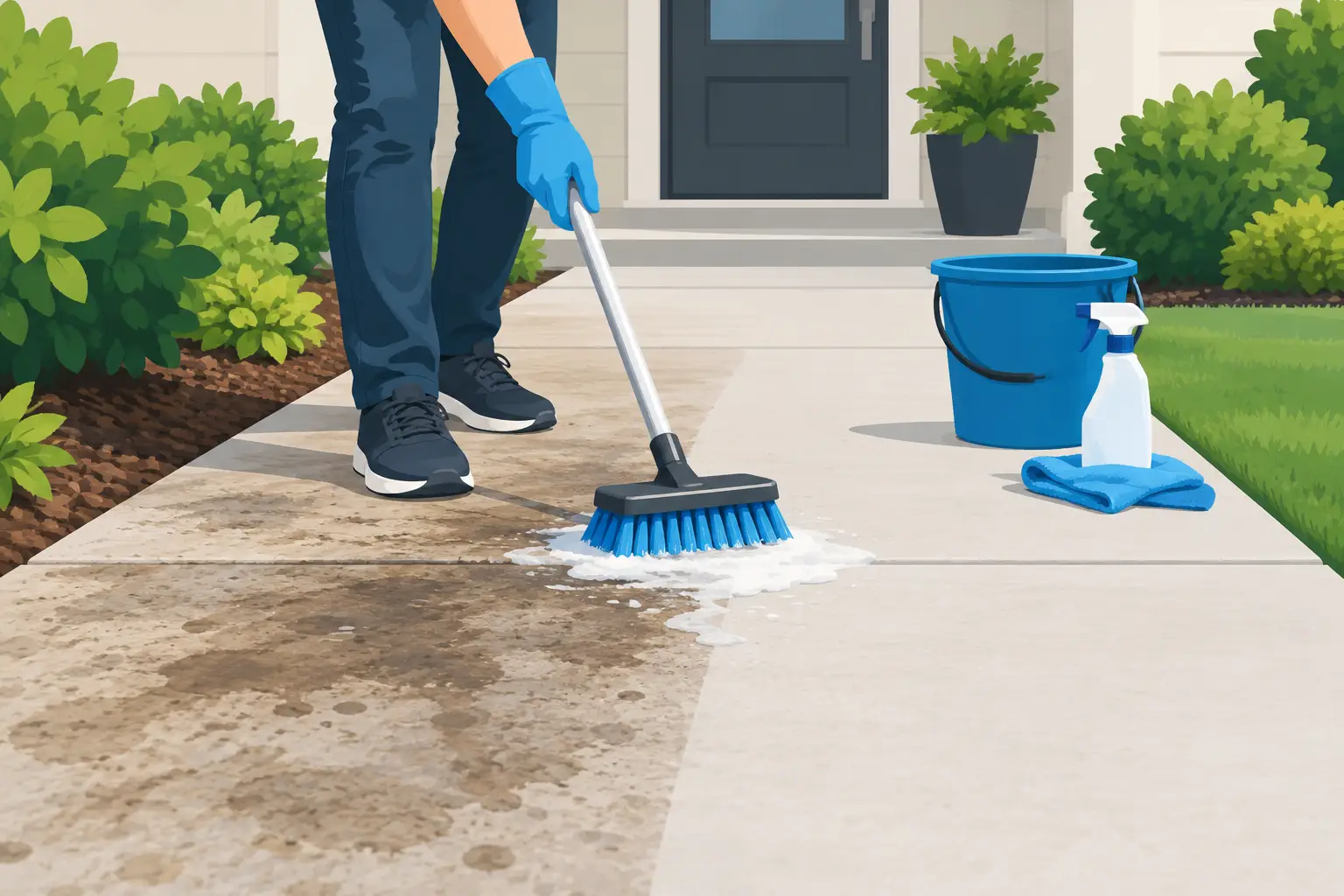
For small, accessible areas of mildew, homeowners can often handle the job with basic precautions. Move patio furniture, cover sensitive plants, close windows, and turn off exterior electrical fixtures if possible. Wear gloves, eye protection, and clothing you do not mind getting stained. Never mix cleaning products. In particular, bleach should never be combined with ammonia, acids, or other household cleaners.
A mild exterior-cleaning solution can be applied from the bottom of the wall upward to reduce streaking. Let it dwell according to the product instructions, keeping it from drying out on the surface. Agitate stubborn spots lightly with a soft-bristle brush, then rinse thoroughly from the top down. A garden hose with a gentle spray is often enough for a small patch. The rinse matters as much as the application, especially around landscaping, window frames, trim, and painted details.
Why High Pressure Is Not Always the Answer
A pressure washer can be useful on durable hardscape, but exterior walls require judgment. It is easy to assume more pressure equals a cleaner result. On walls, that approach can create expensive repairs.
High pressure can drive water through siding laps and gaps around trim. On stucco, it can open small cracks, remove weak surface material, or leave uneven clean spots that stand out in direct sunlight. Wood can splinter or become fuzzy, while brick and mortar may suffer if they are already aged or deteriorating. Even vinyl siding can warp or loosen when the water stream is too aggressive or aimed upward.
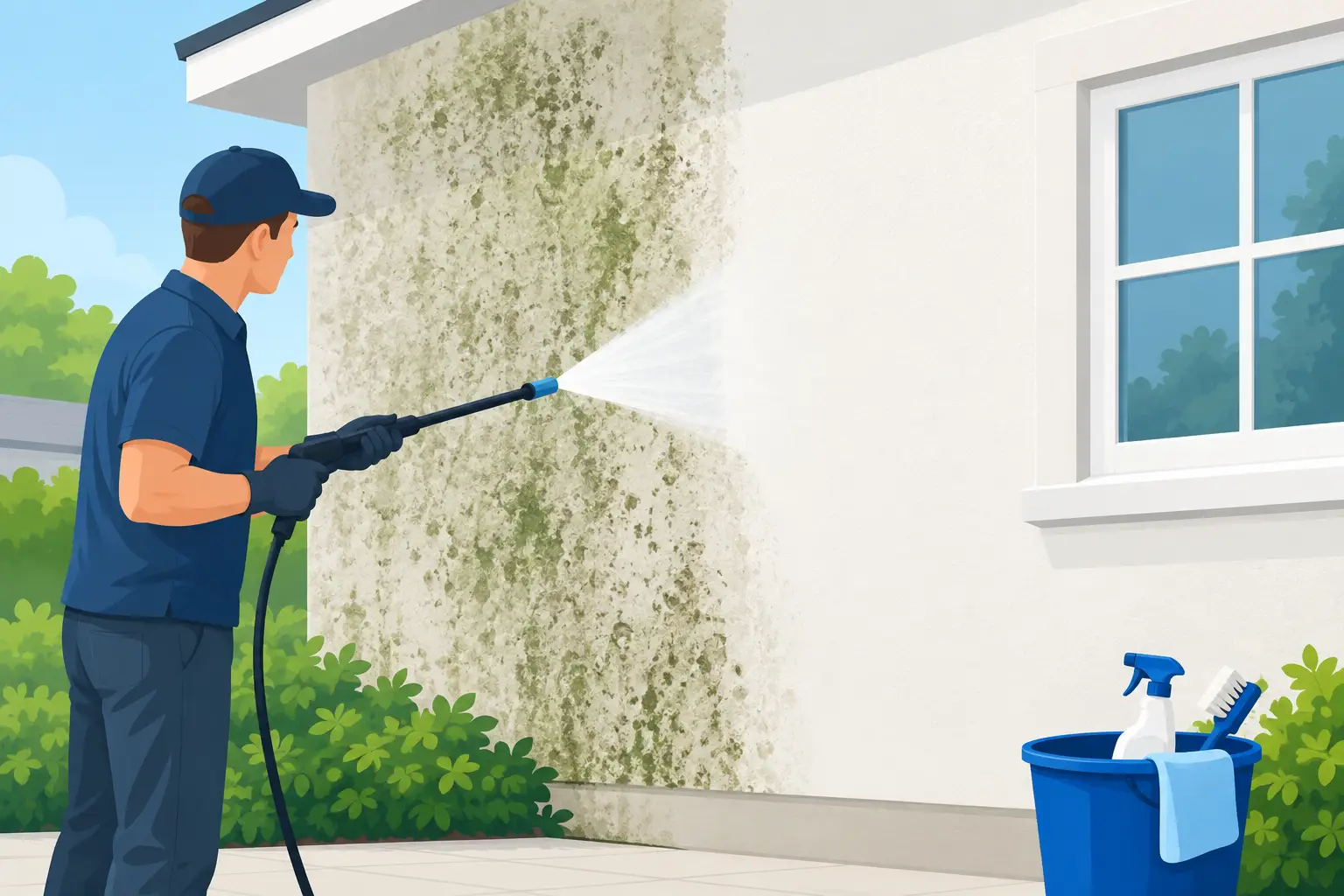
If you use a pressure washer yourself, keep the pressure low, use a wide fan tip, stay well back from the wall, and test a hidden area first. Never spray upward beneath siding panels, directly into vents, around electrical boxes, or at damaged caulking. If the wall has peeling paint, crumbling mortar, visible cracks, soft wood, or older stucco, skip the DIY pressure washing. The risk is not worth it.
Professional soft washing is often the better fit for larger mildew problems. It combines commercial-grade equipment with surface-appropriate detergents to treat the growth without relying on damaging force. That is especially valuable for multi-story homes, apartment buildings, storefronts, and properties where mildew has spread across shaded elevations.
Treat the Cause, Not Just the Stain
Mildew returns when the moisture source remains. After cleaning, look closely at the conditions around the affected wall. A leaking gutter, overflowing downspout, broken sprinkler head, dense shrubs, or poor drainage may be keeping the surface wet long after rain ends.
Trim vegetation back so the wall can dry and air can move freely. Redirect sprinkler spray away from the building. Clean gutters regularly and make sure downspouts carry water away from the foundation and exterior walls. If a section of siding or trim repeatedly gets wet, inspect flashing, rooflines, and window seals for leaks.
Shade is not always something you can or should remove, particularly around mature trees. In those situations, regular maintenance is the practical answer. A north-facing wall under heavy tree cover may need professional cleaning more often than a sunny, open side of the same building. For many Bay Area properties, a seasonal or quarterly exterior-care schedule keeps organic growth from becoming a major restoration job.
When Mildew Calls for Professional Cleaning
A small patch near a hose bib or garden bed is one thing. Widespread green, gray, or black staining across siding, stucco, retaining walls, or exterior trim is another. Professional help makes sense when the growth is extensive, the wall is hard to reach, the material is delicate, or you are unsure whether you are seeing mildew, algae, mold, or pollution staining.
It is also the right move for commercial properties. A stained facade affects how customers, tenants, and visitors perceive the building before they walk through the door. For landlords and property managers, exterior mildew can turn routine maintenance into tenant complaints, inspection concerns, and avoidable repair costs when moisture damage goes unchecked.
A trained exterior-cleaning crew assesses the material before selecting a method. That means protecting landscaping, choosing a compatible detergent, applying the correct dilution, managing runoff, and rinsing without harming the finish. The visible change can be immediate, but the larger benefit is preserving the siding, paint, stucco, brick, and trim that cost far more to replace than to maintain.
At Blast Off Now Pressure Washing, our team uses certified soft-wash methods and eco-safe detergents for exterior surfaces that need a deep clean without unnecessary force. Whether the job is a mildew-stained home in Oakland, a storefront in San Francisco, or a multi-unit building elsewhere in the Bay Area, we focus on clean results, careful protection, and a property that looks ready to make the right impression.
Keep Exterior Walls Clean Longer
Once the wall is restored, a few simple habits can extend the result. Check shaded sides of the building after rainy periods. Clear leaves from gutters and roof valleys before they create overflow. Keep mulch and soil from piling against siding, and avoid placing planters tight against exterior walls where they hold dampness.
Paint condition also matters. Quality exterior coatings help shed water, but peeling, cracked, or chalking paint gives mildew more places to grip. Cleaning should come before repainting, not after. Applying fresh paint over active mildew may hide the discoloration briefly, but the underlying growth can continue to affect the finish.
If mildew keeps coming back in the same place within a few months, treat that as a signal rather than a cleaning failure. Find the water source, correct the drainage or ventilation issue, and then schedule the right wash for the material. A clean exterior is not just a cosmetic win. It is one of the clearest, most practical ways to stay ahead of property damage and keep your building looking cared for.