
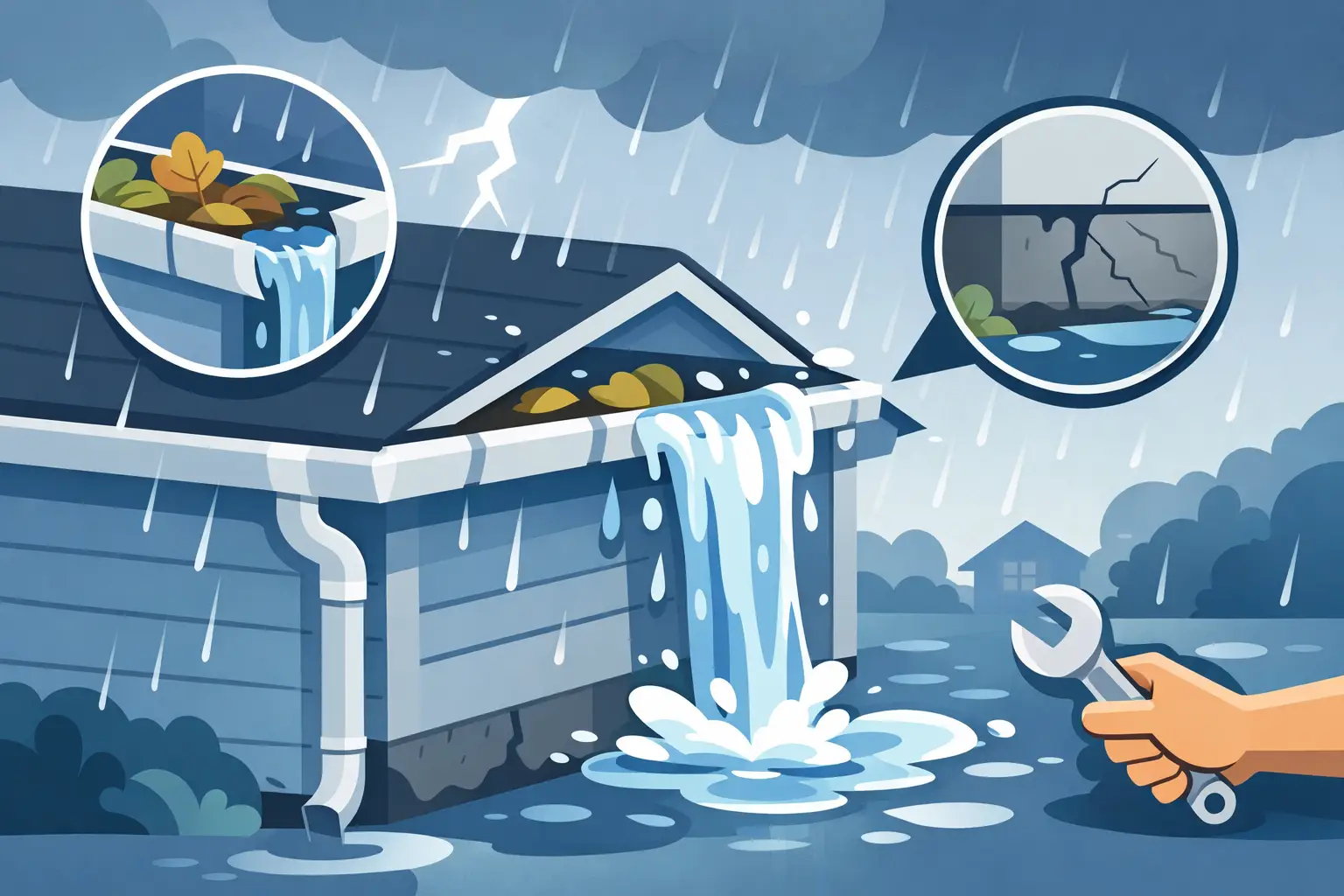
A gutter can look harmless right up until the first hard rain sends water spilling over its edge. For Bay Area homeowners and property managers, knowing how to prevent gutter overflow damage means protecting far more than the gutter itself. Overflowing water can soak fascia boards, stain siding, flood walkways, erode landscaping, and work its way toward a foundation or lower-level entry.
The good news is that most overflow problems are preventable when gutters are treated as part of the property’s larger drainage system. Regular cleaning matters, but so do downspouts, roof drainage patterns, gutter condition, and safe water discharge away from the building.
How to Prevent Gutter Overflow Damage Before Rainy Season
Waiting until water is pouring over the edge is expensive. A planned inspection before the wet season gives you time to remove buildup, identify weak spots, and correct drainage issues without an emergency repair bill.
For most homes, gutters should be inspected at least twice a year: once after the dry season and again after heavy leaf drop or major storms. Properties beneath mature trees, near pines, or exposed to windblown debris may need cleaning every three months. Multi-unit buildings and commercial properties often benefit from a set maintenance schedule because one clogged roofline can affect multiple entrances, walkways, and tenant areas.
Clear Debris From the Entire System
Leaves are only part of the problem. Gutters can hold roof granules, twigs, seed pods, moss, dirt, nesting material, and even discarded construction debris. Over time, this material forms a compacted layer that prevents water from reaching the downspouts.
A clean-looking gutter can still be blocked at the outlet. That is why effective gutter service includes removing debris along the full run, checking each downspout opening, and confirming that water has a clear path from the roof to the discharge point. Simply pulling out visible leaves near the top is not enough when a packed clog is sitting around the downspout inlet.
Be careful with pressure around older gutters, loose fasteners, roof shingles, and delicate exterior materials. The right process depends on the condition of the property. Skilled exterior-cleaning crews use controlled methods that clear buildup without turning a routine maintenance task into damaged siding, loosened components, or water forced where it does not belong.
Test Every Downspout With Water
After debris is removed, run water through the system. A steady stream should move through each gutter, enter the downspout, and exit away from the structure. If water pools in the gutter, backs up at the outlet, or trickles out slowly, there may be a hidden blockage or an improperly pitched section.
Downspouts can clog near the top, at elbows, or underground where extensions connect to drainage lines. If a downspout releases water directly at the base of a building, it is technically working, but the property is still at risk. Add or repair extensions so runoff is directed away from foundations, stairs, driveways, and heavily used walkways.
Watch for the Early Signs of Overflow Damage
Gutter problems rarely begin with a dramatic waterfall. More often, they show up as small changes around the roofline and exterior walls. Catching those changes early can prevent wood rot, moisture intrusion, and costly surface repairs.
Look for dark streaks on siding below the gutter, peeling paint around eaves, water marks on soffits, sagging gutter sections, or mulch and soil washed out beneath roof edges. On commercial buildings, puddling near entrances, stained façades, and slippery sidewalks deserve quick attention. They affect appearance, tenant comfort, and safety as much as they affect the building itself.
If gutters are overflowing only in one area, do not assume the whole system needs replacement. The cause may be a localized clog, a loose hanger, a crushed downspout, or a section that has shifted out of slope. On the other hand, repeated overflow across multiple runs can point to undersized gutters, poor roof drainage design, or too few downspouts for the roof area.
Check Gutter Slope and Secure Loose Sections
Gutters need a subtle slope toward the downspouts. If a section is too flat or dips in the middle, water remains in place after rainfall. That standing water adds weight, attracts debris, and speeds up corrosion or deterioration.
Sagging usually means hangers have loosened, fascia boards are compromised, or the gutter is carrying more weight than it should. Do not ignore it because the issue appears cosmetic. A gutter pulling away from the roofline can allow water to run behind it, where it may damage the fascia, soffit, and wall assembly.
A professional inspection can determine whether a simple adjustment is enough or whether the system needs repair. That distinction matters. Replacing gutters before checking slope, downspouts, and roof runoff can waste money, while delaying a necessary repair can allow water damage to spread.
Manage Roof Debris and Nearby Trees
The fastest way for a clean gutter to become clogged again is for the roof above it to remain covered in leaves, moss, and loose debris. Rain washes that material downhill, where it collects at the gutter line and blocks outlets.
Keep branches trimmed back from the roof where practical. This reduces leaf buildup, limits abrasion from branches during wind, and makes it harder for animals to access the roofline. It also helps sunlight reach damp areas where moss and organic growth tend to hold moisture.
Roof cleaning should be handled with care. Aggressive pressure can damage shingles, dislodge protective granules, or force water under roofing materials. A professional should match the method to the roof type and condition, especially on older homes and buildings with delicate materials. Soft-wash methods and controlled debris removal are often safer choices than blasting a roof with high pressure.
Protect the Ground Below the Gutters
Gutter overflow is not just a roof problem. Water that spills over the same edge during every storm can carve trenches into soil, flatten plants, splash mud onto siding, and create puddles beside the foundation.
Walk around the property after a heavy rain. Notice where water lands, where it travels, and where it stays. The goal is to move water away without sending it across a neighbor’s property, toward a doorway, or onto a busy sidewalk. Depending on the site, a downspout extension, splash block, buried drain line, or landscape adjustment may solve the problem.
Bay Area properties vary widely. A hillside home in Oakland may need different runoff planning than a flat commercial storefront in San Leandro or a tightly spaced building in San Francisco. Soil grade, paving, retaining walls, neighboring structures, and local drainage conditions all affect the right solution. There is no one-size-fits-all extension length or drainage layout.
Keep Walkways and Drains Clear
When overflow reaches concrete, it carries roof grit, organic debris, and standing moisture with it. That can leave staining, contribute to slippery surfaces, and feed mold or algae growth in shaded areas. Clear nearby drains and keep walkways clean so rainwater has a safe route off the property.
This is especially important for apartment communities, retail spaces, and office properties. A blocked gutter above an entrance can create a recurring hazard exactly where residents, customers, and staff expect a clean, safe path. Fast maintenance protects the building and supports a more professional first impression.
Know When to Call a Professional
Cleaning first-floor gutters may seem manageable, but steep roofs, second-story access, unstable ladders, damaged gutter sections, and hidden drainage issues raise the risk quickly. Professional service is the smarter call when access is difficult or when overflow has already caused staining, wood damage, or drainage problems.
A trained crew can clean the system, inspect for visible failure points, and help identify whether the underlying issue is debris, structural damage, roof runoff, or poor ground drainage. Blast Off Now Pressure Washing provides detailed exterior cleaning for Bay Area homes and commercial properties, using the right approach for the surface and condition rather than treating every job the same.
Regular maintenance is usually less disruptive and less costly than responding after water has damaged paint, fascia, landscaping, or concrete. For properties with heavy tree cover or recurring runoff issues, quarterly service can keep small problems from becoming the next storm’s emergency.
The next time rain is in the forecast, take five minutes to look up at the roofline and down at the ground below it. Clean gutters and clear drainage paths are one of the simplest ways to keep water moving where it belongs: away from your property.