A blackened roof, green siding, and stained driveway may all look like the same problem from the curb. They are not. Soft wash versus pressure washing comes down to the surface, the source of the buildup, and the safest way to remove it without creating expensive damage. The right method does more than make a property look refreshed. It helps protect the materials that hold its value.
For Bay Area homes and commercial properties, exterior cleaning has to account for more than dirt. Moisture, marine air, shade, pollen, algae, mildew, vehicle residue, graffiti, and foot traffic all leave their mark. A skilled crew does not bring one setting and hope for the best. They inspect the material, match the cleaning process to the job, and leave the property cleaner without taking shortcuts.
Soft Wash Versus Pressure Washing: The Core Difference
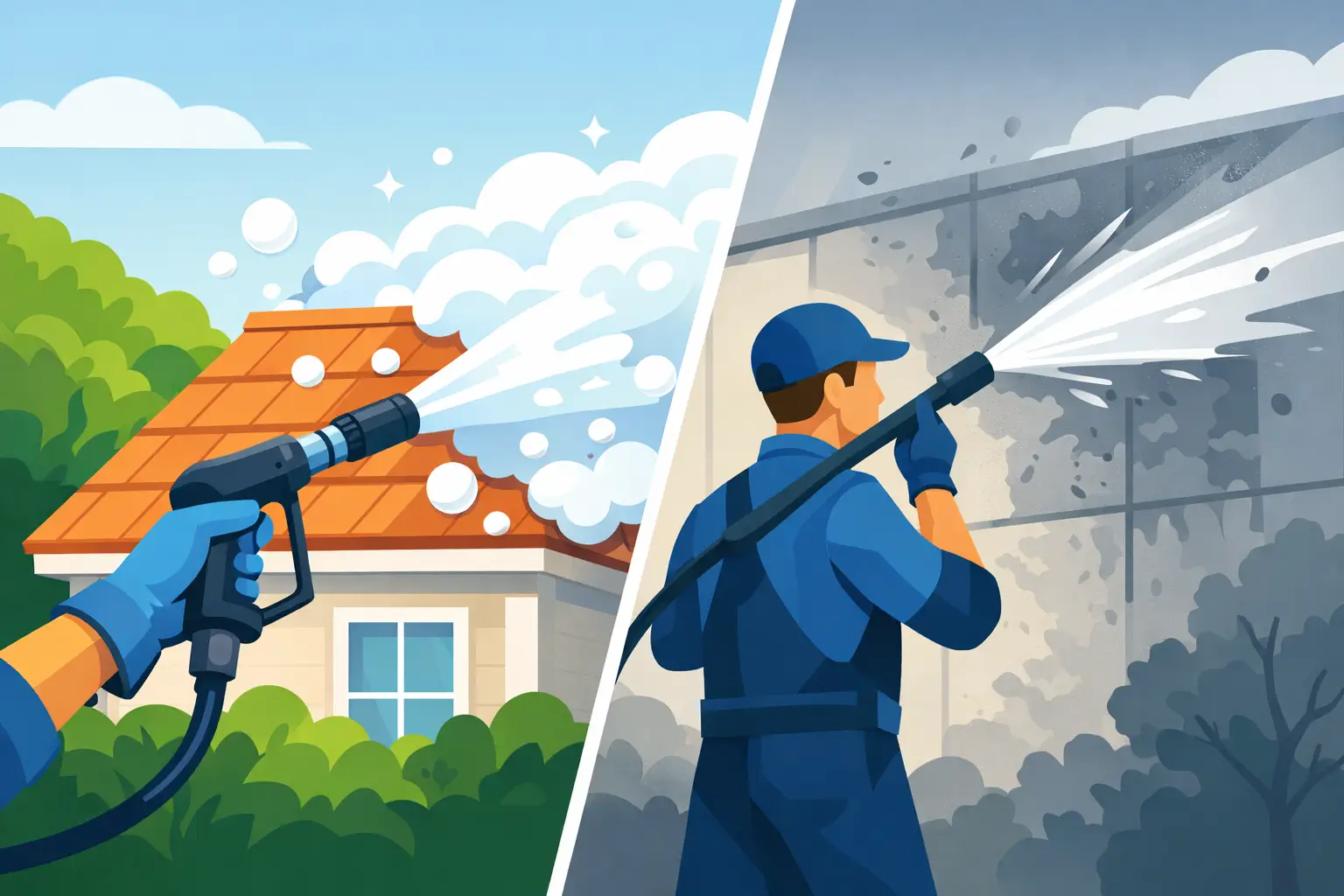
Pressure washing uses a strong stream of water to physically lift away embedded grime, loose paint, mud, gum, and heavy surface staining. It is a powerful tool when used at the correct pressure, distance, and spray angle. On durable hardscapes, it can produce an immediate, dramatic transformation.
Soft washing uses low water pressure combined with professional-grade cleaning solutions designed to break down organic growth and surface contaminants. The solution does much of the cleaning work, while the gentle rinse carries away the residue. This approach is built for materials that need thorough cleaning but cannot safely handle forceful water impact.
The distinction matters because water pressure is not a measure of cleaning quality. A contractor can damage soft materials with too much pressure, and they can under-clean a tough concrete stain with too little. Results come from using the right process for the condition in front of you.
When Soft Washing Is the Better Choice
Soft washing is the preferred method for delicate or finished exterior materials, especially when the problem is algae, mildew, mold, or general biological staining. Those dark streaks and green patches are not always sitting loosely on the surface. They can cling to porous materials and return quickly if they are only blasted away rather than treated at the source.
Roofs and Shingles
Roof shingles should not be pressure washed. High-pressure water can dislodge granules, lift shingle edges, force water underneath roofing materials, and shorten the roof’s service life. A controlled soft-wash process treats the organic growth responsible for dark roof streaks without attacking the shingles themselves.
Tile, composite, and other roofing materials also require careful evaluation. The roof may be durable enough to walk on in specific areas, but that does not mean it should receive aggressive pressure. Cleaning a roof safely involves the full picture: material type, pitch, age, drainage, landscaping protection, and runoff control.
Siding, Stucco, and Painted Surfaces
Vinyl siding, painted wood, fiber cement, stucco, and many building facades can look dramatically better after a soft wash. These surfaces collect dust, pollen, mildew, spider webs, and pollution film, particularly in shaded areas or near busy streets.
Pressure that is too high can scar siding, strip paint, chip stucco, and drive water behind wall materials. Once water gets where it does not belong, a simple cleaning project can turn into a repair issue. Soft washing provides the controlled approach needed to clean thoroughly while protecting finishes, seams, and caulking.
Wood Decks and Fences
Wood is especially easy to damage with an inexperienced pressure-washing approach. Excessive force can raise the grain, leave wand marks, cause splintering, and make a deck look fuzzy instead of restored. Soft washing, often combined with a carefully adjusted rinse, is generally the safer choice for painted, stained, weathered, or aging wood.
That said, a sturdy unfinished deck with embedded grime may benefit from some low, controlled pressure after the right cleaning treatment. This is where experience matters. The answer is rarely an all-or-nothing method.
When Pressure Washing Delivers Better Results
Pressure washing is built for hard, durable surfaces that collect ground-in dirt and heavy traffic buildup. Driveways, sidewalks, patios, retaining walls, parking areas, curbs, and commercial concrete are common examples. When concrete is darkened by tire marks, mud, oil residue, foot traffic, or years of grime, gentle rinsing alone may not produce the reset property owners expect.
Concrete, Pavers, and Walkways
Concrete can handle significantly more pressure than roofing or siding, but it still requires technique. Too much pressure or an uneven pass can leave visible striping, etched spots, or a patchy finish. Professional equipment and surface-cleaning tools help create a more consistent result across broad areas.
Pavers require added care because joint sand, sealers, edging, and drainage conditions can change the right approach. Cleaning may reveal that some areas need re-sanding or resealing afterward. A reputable technician should explain that possibility before starting, rather than treating every paved surface like plain concrete.
Commercial Storefronts and High-Traffic Areas
For storefronts, apartment communities, restaurants, and office properties, clean walkways send an immediate message. Dirty concrete can make a well-run business look neglected, while gum, grease, and buildup can affect how safe the entrance feels to tenants and customers.
Pressure washing is often the right choice for these demanding surfaces, especially when paired with pretreatment for specific stains. Scheduling also matters. Commercial cleaning should work around customers, deliveries, residents, and business hours whenever possible. Fast response is particularly valuable when graffiti or sudden staining threatens the appearance of a property.
The Biggest Mistake: Choosing by Appearance Alone
A surface can look tough and still need a gentle method. Painted brick, older mortar, weathered wood, and aging concrete are good examples. Their condition may make them more vulnerable than they appear. On the other hand, a surface that looks delicate may have a durable substrate that can tolerate limited, carefully controlled pressure in certain areas.
The type of staining matters just as much. Green algae, black mildew, red clay, rust, oil, paint overspray, and graffiti each respond differently. Pressure may remove loose dirt quickly, but it may not address the growth or stain chemistry beneath it. Cleaning solutions may be necessary before rinsing, and some stains need specialized treatment beyond either basic method.
This is why an on-site assessment is worth more than a guess based on a photo. A professional should look at the material, age, finish, drainage, buildup, nearby plants, and areas where water could enter the structure. The goal is not simply to make the stain disappear for the afternoon. It is to clean the surface responsibly and help it stay presentable longer.
What a Professional Exterior Cleaning Process Should Include
A dependable cleaning service begins with a clear walkthrough. The technician identifies what needs soft washing, what needs pressure washing, and where a combined approach makes sense. They should also point out pre-existing cracks, peeling paint, delicate trim, loose mortar, or drainage concerns before work starts.
Next comes surface preparation. Nearby plants, furniture, electrical fixtures, and sensitive areas need protection. Professional crews use appropriate eco-safe detergents, apply them with purpose, and control runoff instead of treating chemical use as an afterthought.
The cleaning itself should be methodical, not rushed. Proper dwell time allows cleaning agents to work on organic buildup. Correct pressure, nozzles, and distance protect the surface. A final rinse and inspection confirm that the property looks consistently clean, not just clean in the easiest spots.
For recurring needs, quarterly or seasonal maintenance can prevent buildup from becoming a major restoration project. This is often a practical option for shaded homes, busy commercial walkways, multi-unit properties, and buildings exposed to regular traffic or marine moisture.
How Bay Area Property Owners Can Make the Right Call
If your roof, siding, stucco, painted exterior, or wood deck has mildew or algae, soft washing is usually the starting point. If your driveway, sidewalk, patio, parking area, or hard concrete has embedded dirt and traffic stains, pressure washing is often the stronger solution. But the final decision should depend on the exact material and condition, not a one-size-fits-all rule.
Blast Off Now Pressure Washing uses commercial-grade equipment and certified soft-wash methods to match the cleaning technique to the property, whether the job involves a delicate residential exterior or a demanding commercial walkway. Licensed, insured service gives owners and managers the confidence that their property is being treated with care.
A clean exterior changes how a home feels when you pull into the driveway and how a business is judged before a customer reaches the door. Choose the method that protects the surface first, then let the transformation speak for itself.