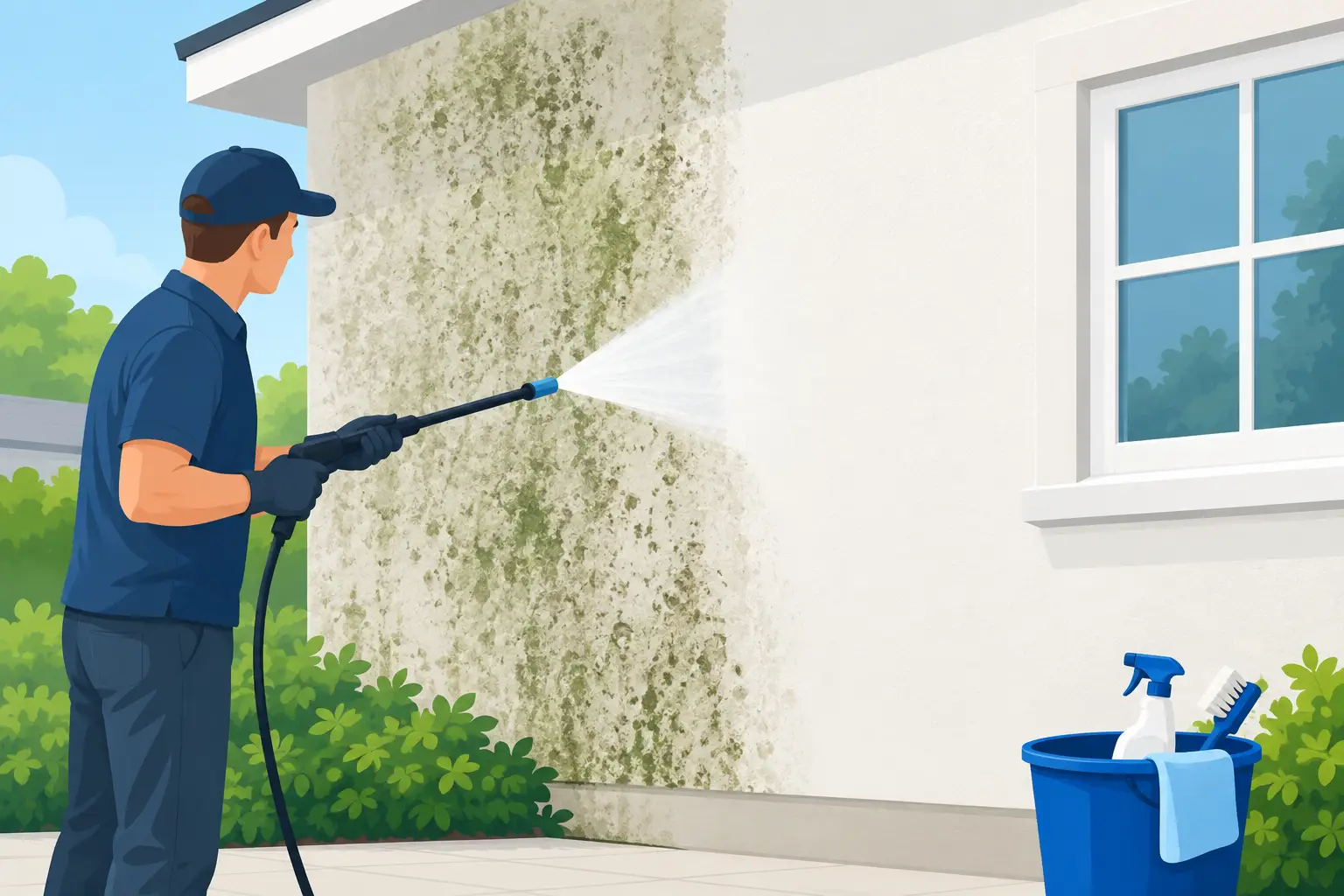

Stucco can look clean one month and suddenly show dark streaks, green growth, or dusty gray staining the next. Bay Area fog, coastal moisture, tree cover, and airborne grime all settle into its textured surface. Soft washing for stucco homes is the right response when the goal is more than a quick visual improvement – it is a controlled cleaning method designed to protect the finish while removing the organic growth and buildup causing the problem.
Why Stucco Needs a Different Cleaning Method
Stucco is durable, but it is not invincible. Its rough, porous texture catches dust, pollen, soot, cobwebs, algae, mildew, and moisture. Once those contaminants settle into the surface, a garden hose rarely reaches them. Using too much pressure, however, can create a far more expensive issue than a dirty wall.
High-pressure washing can scar the finish, force water behind cracks, loosen weak areas, and strip paint from coated stucco. It can also drive contaminants deeper into a porous surface instead of fully treating them. That is why a one-size-fits-all pressure washing approach does not belong on a stucco exterior.
Soft washing uses low-pressure water paired with a surface-appropriate cleaning solution. Rather than blasting stains away, the treatment breaks down algae, mildew, mold, and grime at the source. The exterior is then rinsed carefully, leaving the stucco cleaner without the aggressive force that can damage delicate finishes.
This distinction matters for homes throughout Oakland, San Francisco, Marin County, and other Bay Area communities. A shaded wall in a damp microclimate may need more frequent treatment than a sunny, inland-facing wall just a few miles away.
What Soft Washing Removes From Stucco
A professional soft wash is especially effective on biological staining. Green or black patches are often algae, mildew, or mold growth fueled by moisture and shade. Dark streaks beneath gutters can be a mix of runoff, roof debris, and organic buildup. Near busy streets, stucco may also collect fine soot and pollution residue that dulls the original color.
The goal is not to make an older exterior look artificially new. It is to remove the buildup hiding the condition of the actual surface. Once the grime is gone, homeowners and property managers can see whether they are dealing with a cleaning issue, a paint issue, or stucco damage that needs repair.
Soft washing is also useful before exterior painting. Paint adheres better to a clean, dry surface than to one coated with chalky residue, mildew, or airborne contaminants. Still, washing is not a substitute for proper preparation. Cracks, failed caulking, loose material, and moisture intrusion should be addressed before paint goes on.
The Right Way to Soft Wash a Stucco Exterior
Good results begin before any solution touches the wall. A trained crew inspects the stucco type, visible cracks, failing paint, nearby plants, windows, vents, and vulnerable fixtures. Traditional cement stucco and synthetic EIFS can look similar from a distance, but they should not be treated exactly the same way. EIFS is particularly sensitive to water intrusion and requires a cautious, informed approach.
Next comes protection. Plants are pre-wet and monitored, exterior electrical areas are considered, and windows and openings are checked. A quality cleaning crew does not treat surrounding landscaping as an afterthought. The property should look better when the work is complete, not cleaner at the expense of the shrubs below it.
The cleaning solution is applied at low pressure and allowed enough contact time to work on organic growth. Dwell time matters. If a technician rushes straight to rinsing, stains may appear to fade but return quickly because the growth was never fully treated.
After treatment, the surface is rinsed with controlled pressure. The technician adjusts the process based on the stucco’s condition, the severity of staining, and the home’s drainage details. Heavily soiled walls may require a second targeted application rather than stronger pressure. That patience is part of what protects the finish.
When Pressure Can Be the Wrong Choice
The word “pressure washing” often gets used for every type of exterior cleaning, but the method should match the material. Concrete driveways, sidewalks, and certain hardscape surfaces can handle more force when cleaned correctly. Stucco generally needs a softer touch.
Pressure may be especially risky when the exterior has hairline cracks, aging paint, loose patches, damaged caulk around windows, or signs of prior moisture trouble. The water itself is not always the problem. The problem is forcing it where it does not belong.
There are cases where cleaning should wait. If stucco feels soft, sounds hollow in areas, shows major cracking, or has white mineral deposits that suggest ongoing moisture movement, a contractor may need to assess it first. A responsible exterior-cleaning professional should identify obvious concerns instead of washing over them and hoping for the best.
How Often Should a Stucco Home Be Soft Washed?
For many Bay Area homes, a professional cleaning every 12 to 24 months keeps staining from becoming entrenched. But there is no single schedule that fits every property. Homes near the coast, under mature trees, beside busy roads, or on persistently shaded lots may benefit from annual service. A bright, dry property with limited tree cover may stay clean longer.
Property managers should also consider appearance standards and tenant experience. A multi-unit building with algae-stained walls, dirty walkways, and neglected entry areas can make residents and visitors question how well the property is maintained. Routine exterior cleaning supports curb appeal, but it also helps reveal small maintenance issues before they become larger ones.
The best time to schedule is before buildup becomes obvious from the street. Waiting until stains are heavy can mean more treatment, more time, and a harder path back to a consistent finish. Recurring maintenance is often simpler and more cost-effective than emergency cleaning after months of neglect.
How Homeowners Can Protect Stucco Between Cleanings
Small maintenance habits can reduce how quickly grime returns. Keep gutters flowing so water does not run down exterior walls. Trim branches that sit against the home or keep walls in constant shade. Address leaking irrigation heads, since repeated spray against stucco creates ideal conditions for algae and staining.
Watch for new cracks and deteriorated caulk around windows, doors, vents, and utility penetrations. These are repair items, not cleaning targets. Cleaning can improve the appearance of the wall, but it cannot solve the underlying source of water intrusion.
Avoid experimenting with a high-powered rental washer or harsh, untested chemicals. The upfront savings can disappear quickly if the finish becomes etched, paint peels, or landscaping is damaged. If a spot needs attention between scheduled service visits, a light rinse with plain water may be appropriate for loose dust, but persistent stains deserve a professional assessment.
Choose a Crew That Treats Your Home Like a Finish, Not a Target
The right provider will explain what they see, identify the safest method, and give you a clear estimate before work begins. They should be licensed and insured, use commercial-grade equipment, and understand that stucco cleaning is a restoration service, not a race to use the highest pressure possible.
Blast Off Now Pressure Washing brings that careful, results-driven approach to Bay Area homes and properties. The work starts with the condition of your exterior and ends with a clean finish that supports the value, appearance, and long-term care of the property.
A cleaner stucco exterior changes how a home feels before anyone walks through the front door. More importantly, regular care gives you a clearer view of the surface you have invested in – so you can enjoy it, maintain it, and act quickly when it needs more than cleaning.