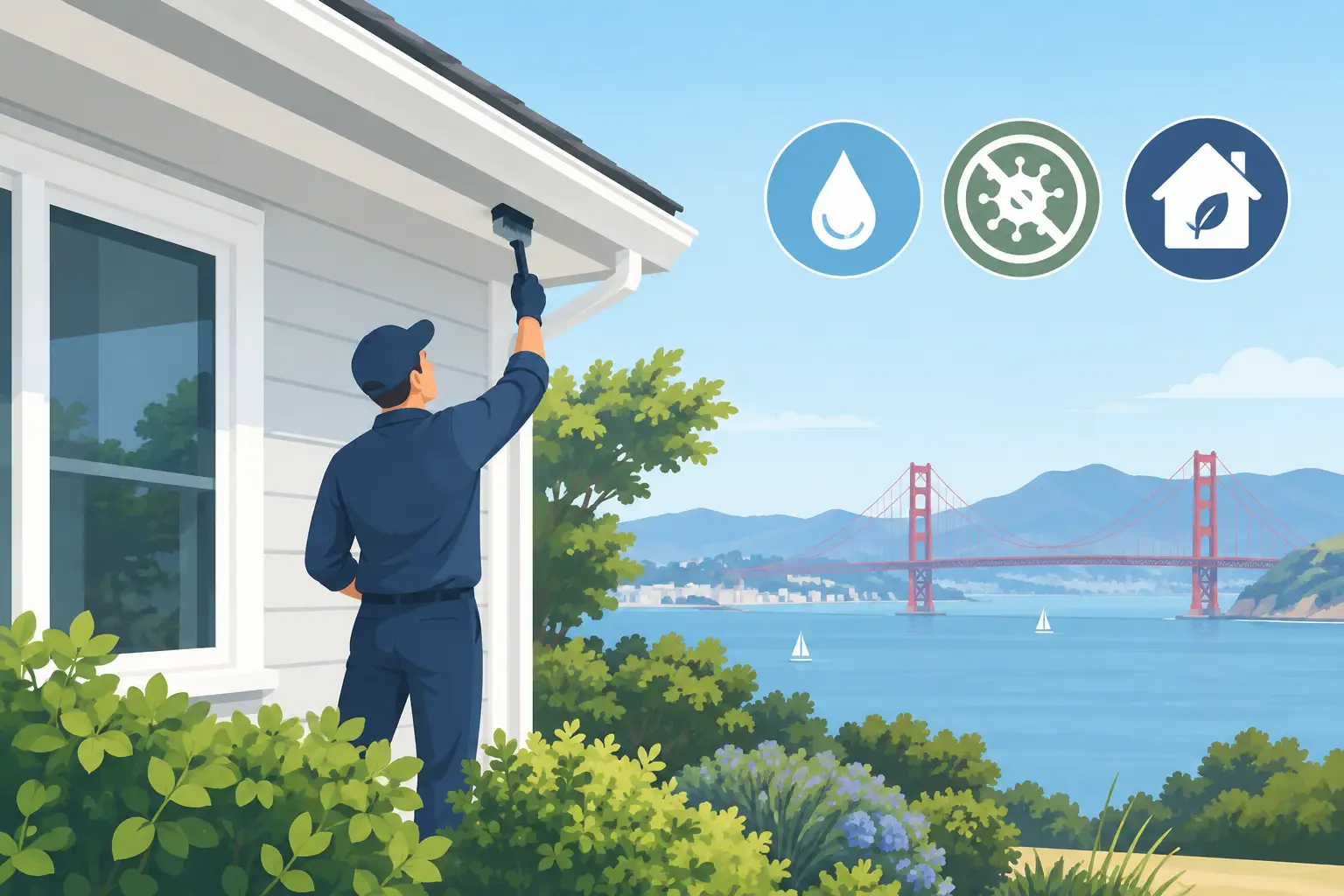
Green streaks on siding, black roof stains, slippery walkways, and a dingy building exterior are not problems to solve with maximum pressure. When a property owner asks, “what does soft washing mean?” the practical answer is simple: it is a controlled, low-pressure cleaning method that treats and removes organic growth without putting delicate surfaces at unnecessary risk.
For Bay Area homes and commercial properties, that difference matters. Moisture, shade, coastal air, tree cover, and seasonal weather create ideal conditions for algae, mildew, mold, lichen, and grime to collect on exterior materials. Soft washing cleans the visible mess while addressing the growth causing it.
What Does Soft Washing Mean?
Soft washing means cleaning an exterior surface with a specialized cleaning solution and low-pressure water. Instead of relying on the force of a pressure washer to blast away every stain, the technician applies an appropriate detergent mixture, gives it time to work, and rinses the surface carefully.
The goal is not to scrub or strip the material. It is to break down organic contaminants at the source, then wash them away with water pressure that is gentle enough for the surface being cleaned. Think of it as treating the problem before rinsing it off.
This method is especially useful where high pressure could cause damage. Vinyl siding, painted wood, stucco, shingles, composite trim, screens, delicate masonry, and many building facades can look dramatically better after soft washing without being hit by an aggressive stream of water.
A professional soft-wash service is not simply turning a pressure washer down. The equipment, solution strength, application method, rinse process, and surface knowledge all matter. A setting that is safe for painted siding may not be right for a tile roof, an older stucco wall, or a commercial storefront with sensitive landscaping nearby.
How Soft Washing Actually Cleans
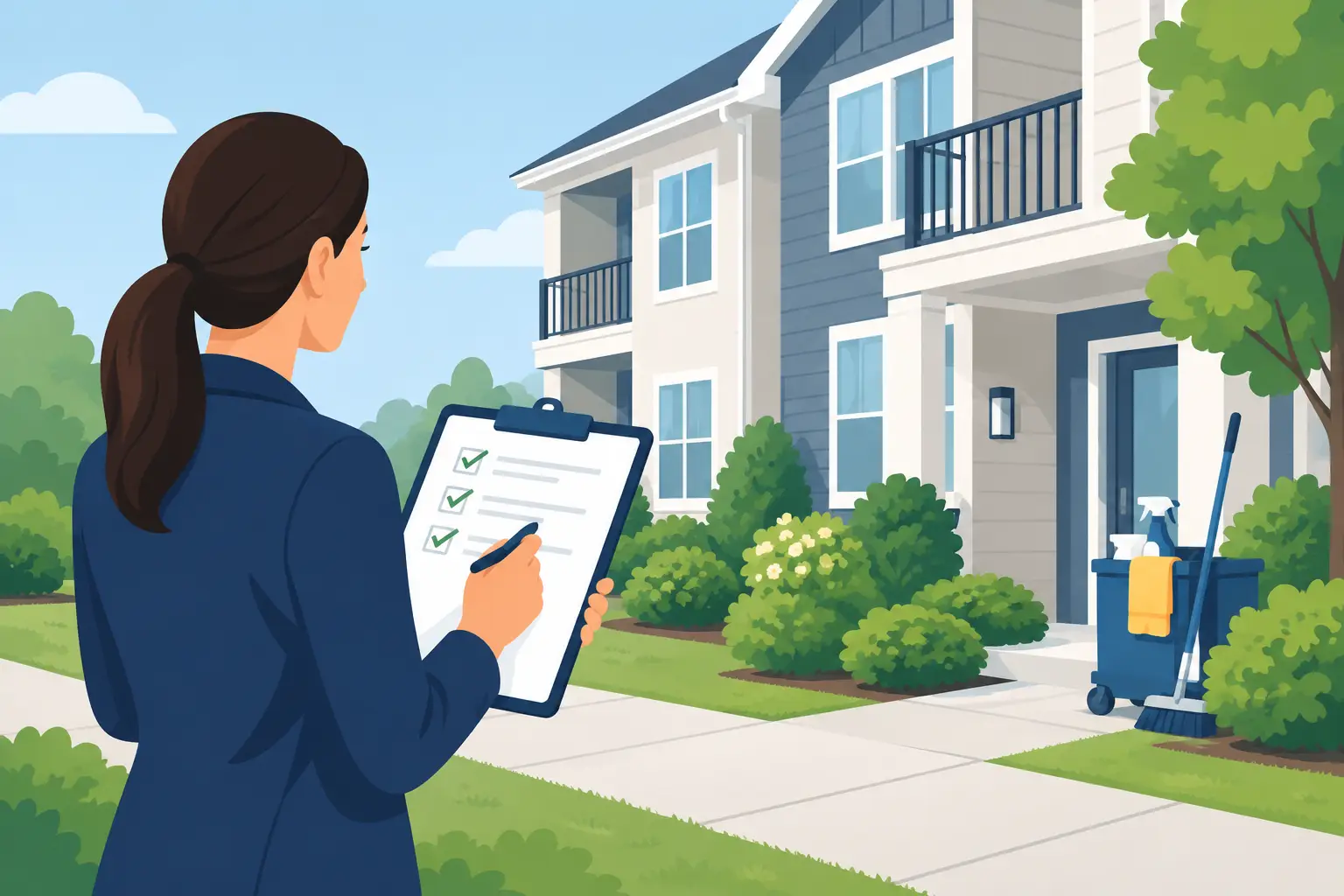
The cleaning process starts with inspection. A trained crew looks at the surface material, the type of staining, existing damage, drainage, nearby plants, and areas where water should not enter. This helps determine whether soft washing is the right approach and what cleaning solution should be used.
Next, the surface is prepped and protected. Landscaping may be pre-rinsed, windows and sensitive areas are considered, and the work area is organized to prevent overspray or runoff concerns. The cleaning solution is then applied at low pressure so it can cover the affected surface evenly.
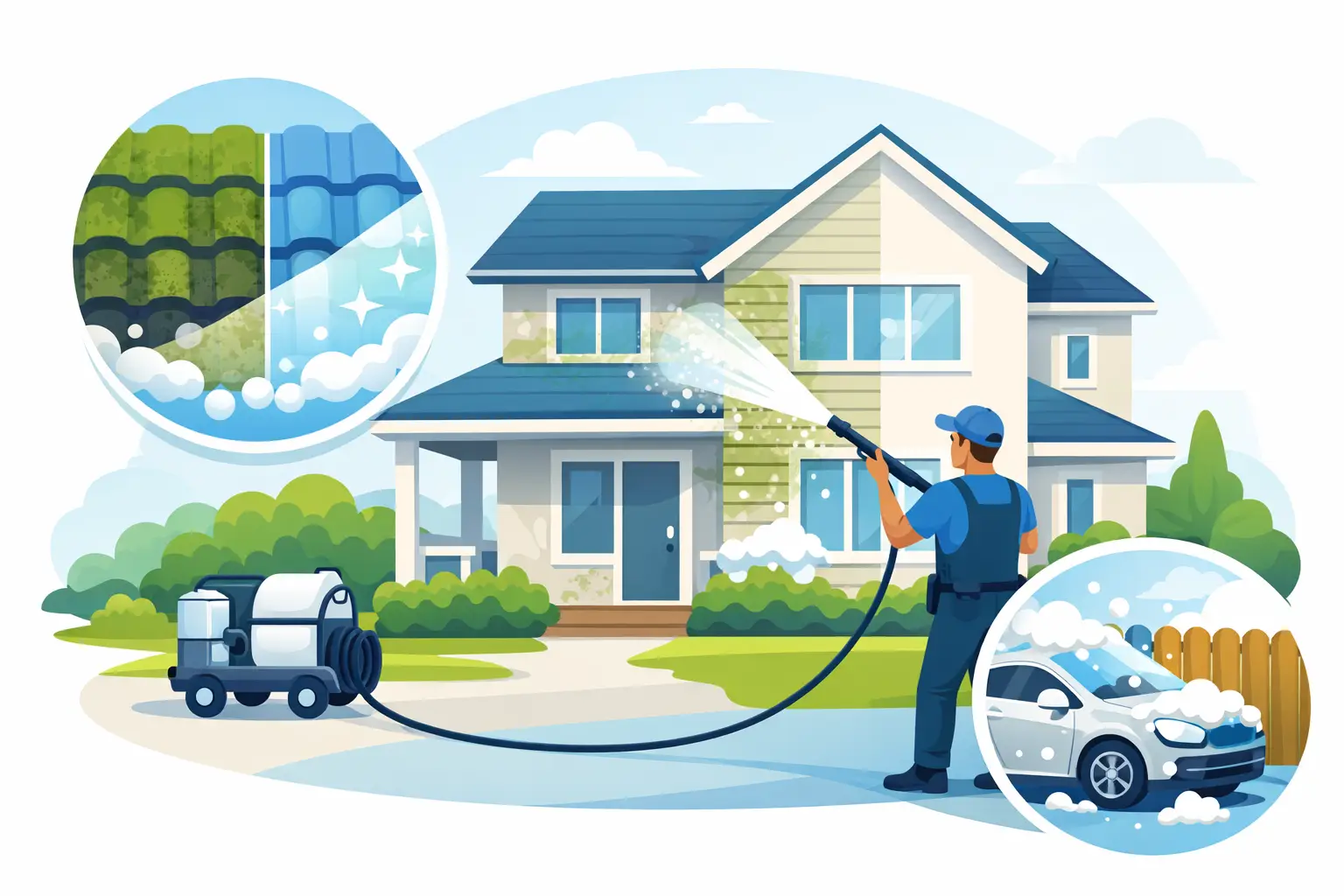
The solution does the heavy lifting. It breaks down algae, mildew, mold, and other organic staining that has attached to the exterior. After the proper dwell time, the technician rinses the area thoroughly with a controlled flow of water. The result is a cleaner, more uniform appearance without the harsh impact associated with high-pressure cleaning.
Some deep stains may need additional treatment, particularly when a surface has been neglected for years. Soft washing can remove the biological growth responsible for discoloration, but it cannot repair faded paint, damaged shingles, permanent rust marks, or worn-out sealant. Honest exterior cleaning means knowing the difference between a cleanable stain and a material that needs repair or replacement.
Where Soft Washing Is the Best Choice
Soft washing is often the right service for a wide range of exterior surfaces. It is commonly used on house siding, painted exteriors, stucco, roof materials, fences, decks, trim, gutters, and building facades. It can also help restore the appearance of exterior areas affected by pollen, dust, bird droppings, mildew, and atmospheric grime.
For homeowners, soft washing is a property-protection service as much as a curb-appeal service. Algae and mildew can make a home look uncared for, but they may also trap moisture against certain materials. Regular cleaning helps reduce the buildup that can contribute to staining, deterioration, and premature maintenance costs.
For property managers and business owners, the same principle applies at a larger scale. A stained façade, dirty awning area, or mildew-covered entry creates a poor first impression before a tenant, customer, or visitor even walks inside. Soft washing keeps exterior finishes looking maintained while using a method suited to materials that should not be aggressively pressure washed.
Soft Washing vs. Pressure Washing
Soft washing and pressure washing are not competing services. They are different tools for different surfaces.
Pressure washing uses higher water pressure to remove compacted dirt, tire marks, gum, grime, and surface buildup from durable materials. It is often the better choice for concrete driveways, sidewalks, patios, parking areas, retaining walls, and other hard surfaces that can handle the force.
Soft washing uses cleaning agents and low pressure to remove organic growth and stains from more delicate materials. It is usually the better choice for roofs, siding, painted surfaces, stucco, and other areas where excessive pressure could force water behind the material, remove paint, scar the surface, or loosen components.
The right method depends on the surface, not just how dirty it looks. A driveway with oil stains and tire marks may need targeted pressure washing. A green, algae-covered side of a home may need soft washing. Some properties need both, with each process used where it delivers the best result safely.
Is Soft Washing Safe for Roofs and Siding?
When performed correctly, soft washing is designed to be a safer option for roofs and siding than high-pressure cleaning. Roof shingles, for example, can be damaged by excessive pressure. High-pressure water may dislodge granules, lift shingles, or push water where it does not belong. Soft washing treats roof algae and dark staining with a low-impact application and rinse approach.
That said, safety comes down to the crew performing the work. The wrong chemical concentration, poor runoff control, inadequate plant protection, or careless application can create problems. This is why licensed and insured professionals should assess the surface rather than applying a one-size-fits-all method.
At Blast Off Now Pressure Washing, the approach is based on matching the cleaning method to the material. The objective is clear: remove the buildup, protect the property, and leave the exterior looking refreshed without cutting corners.
How Long Does Soft Washing Last?
A soft-washed surface often stays cleaner longer than a surface that has only been rinsed with water because the cleaning solution targets the algae, mildew, and organic matter behind the staining. But there is no single timeline for every property.
In shaded areas, beneath trees, near heavy landscaping, or in damp microclimates, growth can return sooner. Sun-exposed surfaces with good airflow may stay clean longer. Roof pitch, drainage, nearby vegetation, and the condition of the underlying material all affect results.
Many Bay Area property owners schedule exterior cleaning as part of regular maintenance rather than waiting for heavy staining to return. Annual service may be enough for some homes, while properties with persistent moisture or high visibility needs may benefit from more frequent attention. Commercial properties may also choose quarterly exterior cleaning to keep entrances, facades, and tenant-facing areas consistently presentable.
Why Professional Soft Washing Pays Off
DIY cleaning can seem straightforward until the work involves ladders, rooflines, chemical handling, delicate finishes, or hard-to-reach exterior walls. Using too much pressure can create immediate damage. Using the wrong cleaner can discolor a surface or harm surrounding vegetation. Skipping proper rinsing can leave residue behind.
Professional service brings the right equipment, surface-specific methods, trained judgment, and a more controlled process. It also saves property owners from spending a weekend testing products, moving ladders, and hoping the result does not create a larger repair bill.
If your exterior is showing green growth, black streaking, or years of accumulated grime, do not assume it needs more pressure. It may need the right treatment. A proper soft wash can restore the clean, cared-for look your property deserves while helping protect the materials that make it valuable.