
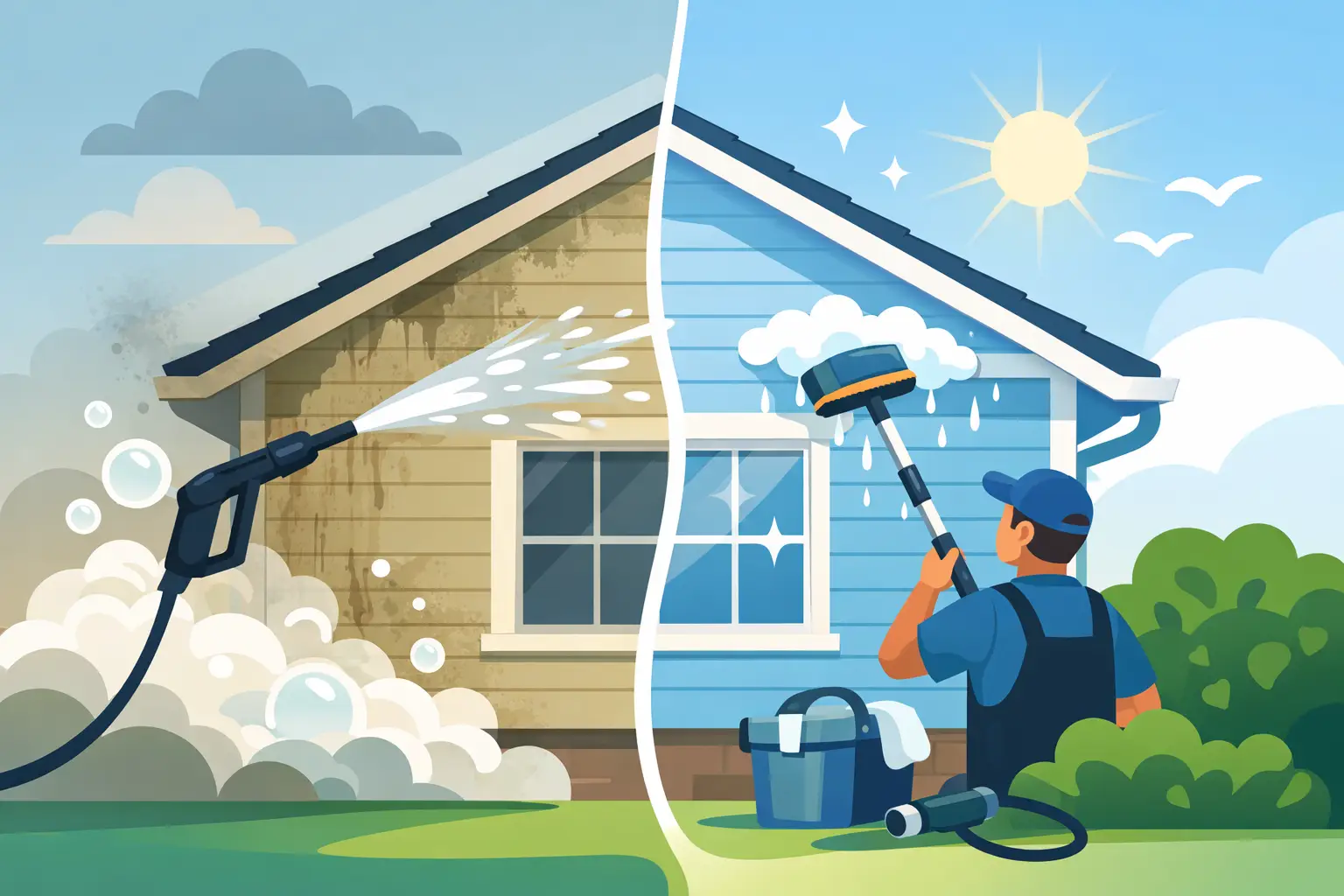
A clean exterior should never come at the cost of damaged siding, etched concrete, stripped paint, or water forced behind a wall. That is why house washing methods matter. The right approach removes the mold, algae, dust, salt air residue, and traffic grime that make a Bay Area property look tired while protecting the materials underneath.
For homeowners, landlords, and property managers, exterior cleaning is not a one-setting job. A stucco home in Oakland, a painted Victorian in San Francisco, and a concrete-sided commercial building in Hayward may all need cleaning, but they do not need the same process. The best result comes from matching the water pressure, detergent, dwell time, and rinse technique to the surface and the stain.
The Two Main House Washing Methods
Most professional exterior cleaning comes down to two approaches: soft washing and pressure washing. Both are effective. The difference is how they do the work and where each method belongs.
Soft washing for delicate exterior surfaces
Soft washing uses low water pressure combined with a surface-appropriate cleaning solution. Instead of trying to blast away organic growth, the solution breaks down mold, mildew, algae, and grime so they can be gently rinsed away.
This method is usually the safer choice for painted siding, vinyl, stucco, wood trim, composite materials, older exterior finishes, and many roofs. It is especially useful when dark streaks or green growth are spreading across a wall. Those stains are often living organisms, not just dirt. Water pressure alone may lighten them temporarily, but it may not treat the source of the problem.
A proper soft wash is controlled from start to finish. Technicians protect nearby plants, apply the right dilution for the material, allow the solution time to work, and rinse thoroughly. Too strong a mix can affect finishes or landscaping. Too weak a mix may leave spores behind. That balance is one reason professional service is often the better value for an expensive home exterior.
Pressure washing for durable hard surfaces
Pressure washing uses more force to lift embedded grime from hard, durable surfaces. It is an excellent choice for concrete driveways, sidewalks, patios, retaining walls, brick, pavers, and some commercial surfaces. These areas collect tire marks, oil residue, foot traffic grime, gum, leaf tannins, and mildew that a garden hose cannot remove.
The key is not simply using high pressure. It is using the correct pressure, nozzle, water flow, and cleaning pattern. Concrete can handle more force than painted wood, but even concrete can be scarred by an inexperienced operator holding a narrow tip too close. Uneven lines, visible wand marks, and etched patches can make a driveway look worse than it did before cleaning.
For large flatwork areas, professional surface cleaners create a more even finish than a pressure washer wand alone. The result is cleaner concrete without tiger-striping, missed sections, or unnecessary wear.
How to Choose the Right Method for Your Home
The right method depends on the surface, the condition of its finish, and the type of buildup present. A good cleaning crew inspects before starting rather than treating every property the same way.
If a home has vinyl siding with mildew along shaded areas, soft washing is generally the right call. If a driveway has years of vehicle staining and dark organic buildup, controlled pressure washing can restore the concrete. If a deck has weathered wood, the solution is more nuanced. Low pressure and a wood-safe cleaner may be needed to avoid raising the grain, splintering boards, or stripping stain.
Stucco also requires care. Bay Area stucco can hold dust, pollution residue, spider webs, and algae in its textured finish. Aggressive pressure can damage the surface or force water into cracks. Soft washing with a careful rinse is typically the safer method, particularly on older buildings or homes with worn paint.
Paint condition matters, too. Washing will reveal loose or failing paint that dirt may have been hiding. That is not a failure of the cleaning process – it is useful information before repainting or repairs. But blasting peeling paint with excessive pressure can create unnecessary damage. A qualified technician adjusts the process or recommends repairs where needed.
Why Water Pressure Alone Is Not a Complete Solution
A pressure washer is powerful, but power is not the same as precision. Homeowners often rent equipment expecting a quick weekend project, only to find that the machine cannot solve every stain safely. The risk is highest around windows, vents, trim, electrical fixtures, aging caulk, and painted surfaces.
Organic growth is another reason pressure alone falls short. Mold, algae, and mildew can return quickly if the visible layer is removed but the spores remain. A targeted soft-wash treatment addresses the growth before the rinse. That helps keep exterior walls, walkways, and shaded areas cleaner for longer.
There is also a water-management issue. Cleaning runoff needs to be handled responsibly, especially near landscaping, drains, and commercial entryways. Eco-safe detergents, plant protection, and proper rinsing procedures make a real difference. The goal is a restored exterior, not a mess left behind for the property owner to solve.
Areas That Need a Different Cleaning Strategy
A full property wash often includes more than the walls. Each area has its own cleaning needs, and combining methods strategically produces a more complete transformation.
Gutters benefit from debris removal and exterior brightening, but they should not be treated as a simple high-pressure target. Water forced into seams or beneath roofing can create problems. Decks need a gentle approach that preserves wood fibers and coating. Pavers may need cleaning followed by attention to joints, while concrete may require degreasing before pressure washing can fully lift vehicle stains.
Roofs require the most caution. High-pressure roof washing can dislodge granules from shingles, damage tiles, and shorten the life of roofing materials. When roof staining needs attention, a specialized low-pressure approach is generally the appropriate path. If anyone recommends blasting a roof with high pressure, it is wise to ask detailed questions before approving the work.
Commercial properties add another layer of planning. Storefront sidewalks, loading areas, dumpster pads, and building facades must be cleaned with tenant traffic, customers, operating hours, and safety in mind. Flexible scheduling and clear work-zone control are as valuable as clean surfaces. For urgent graffiti, speed matters because a fast response helps protect the appearance of the business and discourages repeat tagging.
What Professional House Washing Should Look Like
Professional house washing starts with a walkthrough or clear assessment of the property. The crew should identify surface materials, heavy staining, fragile areas, drainage concerns, and access limitations. From there, the cleaning plan should be straightforward: the right method, the expected result, and any areas where stains may be permanent or repairs are needed.
Before cleaning begins, windows, landscaping, outdoor furniture, and sensitive fixtures should be considered. Plants may be pre-wet and rinsed afterward. Nearby items may need to be moved or protected. Technicians should use commercial-grade equipment, not a one-pressure-fits-all setup, because effective cleaning depends on control.
After the wash, the property deserves an inspection. Look at siding from different angles, check corners and shaded walls, and make sure walkways have an even appearance. A reliable crew does not rush away after the water stops. They make sure the work meets the standard promised.
Blast Off Now Pressure Washing brings that careful, results-driven approach to homes and commercial properties across the Bay Area. Fully licensed and insured service, certified soft-wash methods, and clear estimates give property owners confidence that their exterior is being cleaned with care, not guesswork.
When to Schedule Exterior Cleaning
There is no single calendar date that fits every property. Homes near trees, damp shade, busy streets, or coastal air often need more frequent service than homes in open, dry locations. Many homeowners schedule washing once a year, while property managers may prefer quarterly maintenance for high-visibility buildings, busy sidewalks, and common areas.
Watch for green or black streaks, dull siding, slippery walkways, darkened concrete, cobweb buildup, and stains that remain after rain. These are practical signs that cleaning should move from the to-do list to the schedule. Waiting too long can allow organic growth and contaminants to settle deeper into porous materials.
The best house washing method is the one that restores the property without putting its finishes at risk. Choose a crew that evaluates the surface first, uses soft washing where it belongs, applies pressure only where it is safe, and treats your home or building like the investment it is. A clean exterior does more than look sharp – it helps your property stay ready for whatever comes next.