
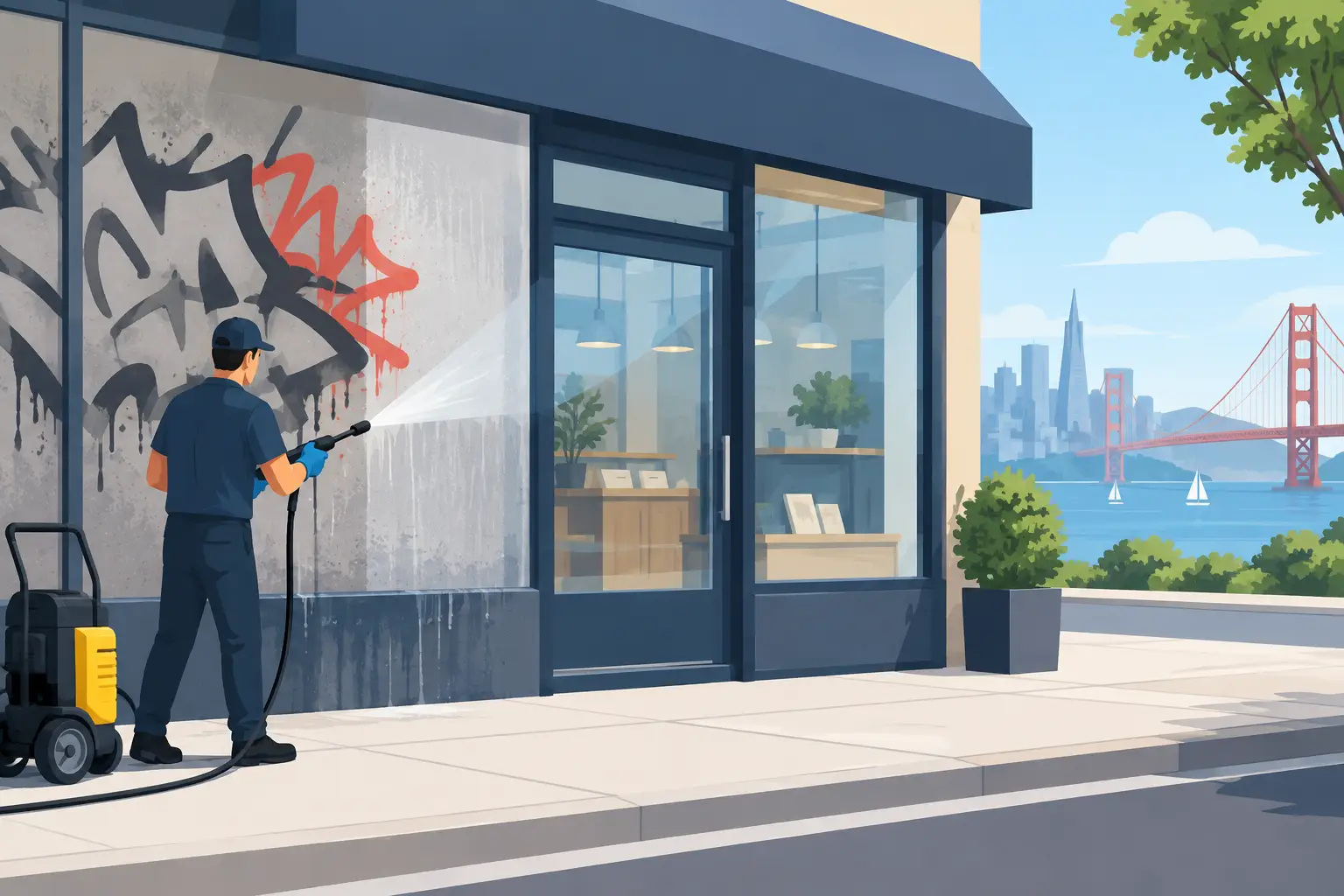
A tagged storefront can change how customers feel before they reach the door. It can make a well-run shop look neglected, distract from signage, and leave tenants or visitors wondering whether the property is being watched. For Bay Area business owners and property managers, a storefront graffiti removal guide starts with one principle: respond quickly, but do not let speed turn into costly surface damage.
Graffiti is not one cleaning problem. Paint, marker, etching, adhesive decals, and repeated tagging all require different treatment. The right process protects the storefront material, removes the visible damage as completely as possible, and leaves the entrance clean enough to support the business you work hard to run.
Why Fast Graffiti Removal Protects More Than Curb Appeal
The longer graffiti remains in place, the more difficult and expensive it can become to remove. Aerosol paint can settle into porous brick, concrete, unsealed stone, and weathered wood. Strong sunlight may bake pigments into a surface, while rain can carry color into surrounding pores and grout lines.
There is also an operational reason to act fast. A clean storefront signals that the property is actively maintained. For retailers, restaurants, offices, and multi-tenant buildings, that message matters to customers, employees, prospective tenants, and neighbors. Prompt removal helps restore the polished, cared-for appearance that supports confidence in the property.
Fast action does not always mean using the nearest solvent or highest-pressure setting. A rushed DIY attempt can spread paint into a larger stain, strip a coating, scar glass, or leave a permanently lighter patch on a facade. The goal is not simply to make the tag less noticeable. It is to restore the surface without creating a new repair project.
Storefront Graffiti Removal Guide: Start With the Surface
Before anyone applies cleaner or water pressure, identify what was tagged. This is the decision that determines the safest removal method.
Glass, metal, painted panels, stucco, brick, concrete, natural stone, wood, vinyl, and awnings each react differently to cleaners and pressure. Smooth, nonporous surfaces such as coated metal or glass may release paint relatively easily. Porous masonry often needs a specialized graffiti remover, controlled dwell time, agitation, and a careful rinse. Delicate or aged finishes may require soft washing rather than aggressive pressure washing.
Etched glass deserves special attention. If graffiti has scratched or chemically etched the glass rather than sitting on top of it, washing alone will not restore it. Trying to scrape or aggressively polish it can make the damage more visible. Document the condition and assess whether glass restoration or replacement is needed.
Take clear photos before cleaning, especially at commercial properties. Photos help with incident reports, insurance documentation, tenant communication, and comparing the final result. They also help identify whether the material was already weathered, cracked, or peeling before removal began.
Match the Method to the Material
Professional graffiti removal is a controlled process, not a one-size-fits-all blast of water. Technicians typically begin with the least aggressive effective option. That may mean a surface-specific remover, a low-pressure rinse, gentle agitation, or hot-water cleaning where appropriate.
High pressure can be effective on durable concrete, but even concrete can be damaged when pressure, heat, angle, or distance are wrong. Too much force may expose aggregate, leave wand marks, or drive pigment deeper into the pores. On stucco, old paint, wood, storefront signage, and decorative trim, excessive pressure can cause peeling, gouging, water intrusion, or costly finish damage.
This is why trained surface evaluation matters. The best method depends on the coating, the age of the graffiti, the surface condition, nearby landscaping, drainage, and whether cleaning runoff could reach public walkways or storm drains.
What to Do Before the Cleaning Crew Arrives
If the tag appeared overnight, secure the immediate area first. Move portable merchandise, sandwich boards, planters, and outdoor seating away from the work zone. If the graffiti is near an entrance, use clear temporary signage so customers can enter safely while the surface is being treated and rinsed.
Avoid painting over the graffiti before evaluating the surface. Paint may be the right solution when a painted wall is badly stained or the original finish has failed, but it is usually better to remove as much graffiti as possible first. Painting over untreated residue can create visible bleed-through, uneven sheen, or an obvious patch that does not match the surrounding facade.
Do not use a razor blade on glass, rough scrub pads on coated metal, or household solvents on unknown finishes. These shortcuts can create scratches and discoloration that remain long after the graffiti is gone. If you must address a small fresh mark before help arrives, test any approved product in an inconspicuous area and use minimal pressure.
For repeated incidents, keep a simple record of dates, photos, locations, and the type of marking. Patterns can help property managers coordinate lighting, camera coverage, access control, and maintenance scheduling. Cleaning is an immediate restoration step, but prevention helps reduce how often your business has to deal with the disruption.
Common Storefront Graffiti Problems and the Right Response
Spray paint on concrete is common around sidewalks, loading areas, and building bases. Because concrete is porous, removal may require more than one pass. A professional can use commercial-grade equipment and targeted detergents to lift pigment while limiting visible cleaning marks. Older paint may leave a faint shadow even after careful treatment, particularly on weathered or unsealed concrete.
Marker on glass or metal often looks simple, but the risk lies in the finish underneath. Glass can be scratched by improper scraping. Powder-coated metal, aluminum frames, and painted roll-up doors can lose color or gloss when treated with harsh solvents. The cleaner must remove the ink without dulling the surface.
Graffiti on brick, stone, and stucco calls for extra patience. These materials have pores, texture, and mortar lines that hold pigment. Heavy pressure can damage mortar and erode soft stone, while the wrong chemical can leave bleaching or color changes. Test areas and controlled application are part of doing the job correctly.
Tags on signage, awnings, and window graphics may be better handled through replacement or specialty restoration. A cleaner should protect lettering, adhesives, and electrical components rather than treating every marked surface like masonry. In some cases, preserving an expensive sign is worth a slower, more specialized process.
When to Call a Professional Graffiti Removal Service
A small tag on a durable, nonporous surface may be manageable with the correct product and care. But professional service is the smarter choice when graffiti is on porous masonry, painted facades, windows, signage, historic materials, wood, or surfaces close to landscaping and public drains.
It is also the right call when the property needs to open quickly. Commercial crews can evaluate multiple materials, contain the work area, select the proper pressure or soft-wash method, and clean surrounding sidewalks so the entrance looks consistently maintained rather than partially treated.
For Bay Area storefronts, same-day responsiveness can make a meaningful difference. Blast Off Now Pressure Washing uses commercial-grade equipment, eco-safe cleaning solutions, and surface-appropriate methods to remove graffiti while protecting the materials beneath it. Licensed and insured service also gives property owners and managers confidence when a high-visibility entrance needs immediate attention.
Build Graffiti Removal Into Your Maintenance Plan
Recurring graffiti is frustrating, but it can also reveal where a property needs a stronger maintenance routine. Quarterly exterior cleaning can keep sidewalks, walls, entryways, and building bases from collecting the grime that makes a small new tag look even worse. A cleaner background makes issues easier to spot and helps the property look cared for between visits.
Consider protective coatings for suitable surfaces after the area is fully cleaned and dry. Anti-graffiti coatings can make future removal easier, though they are not right for every material and may affect appearance. On historic brick, natural stone, or textured finishes, test compatibility before committing to a full application.
Good lighting, trimmed landscaping, clean sightlines, and prompt removal all work together. No single measure guarantees a tag-free storefront, but consistent attention reduces the chance that vandalism becomes part of the property’s appearance.
A storefront does not need to carry the evidence of an overnight tag for weeks. Treat the surface carefully, act with purpose, and restore the entrance quickly so customers see the business you are proud to operate.