
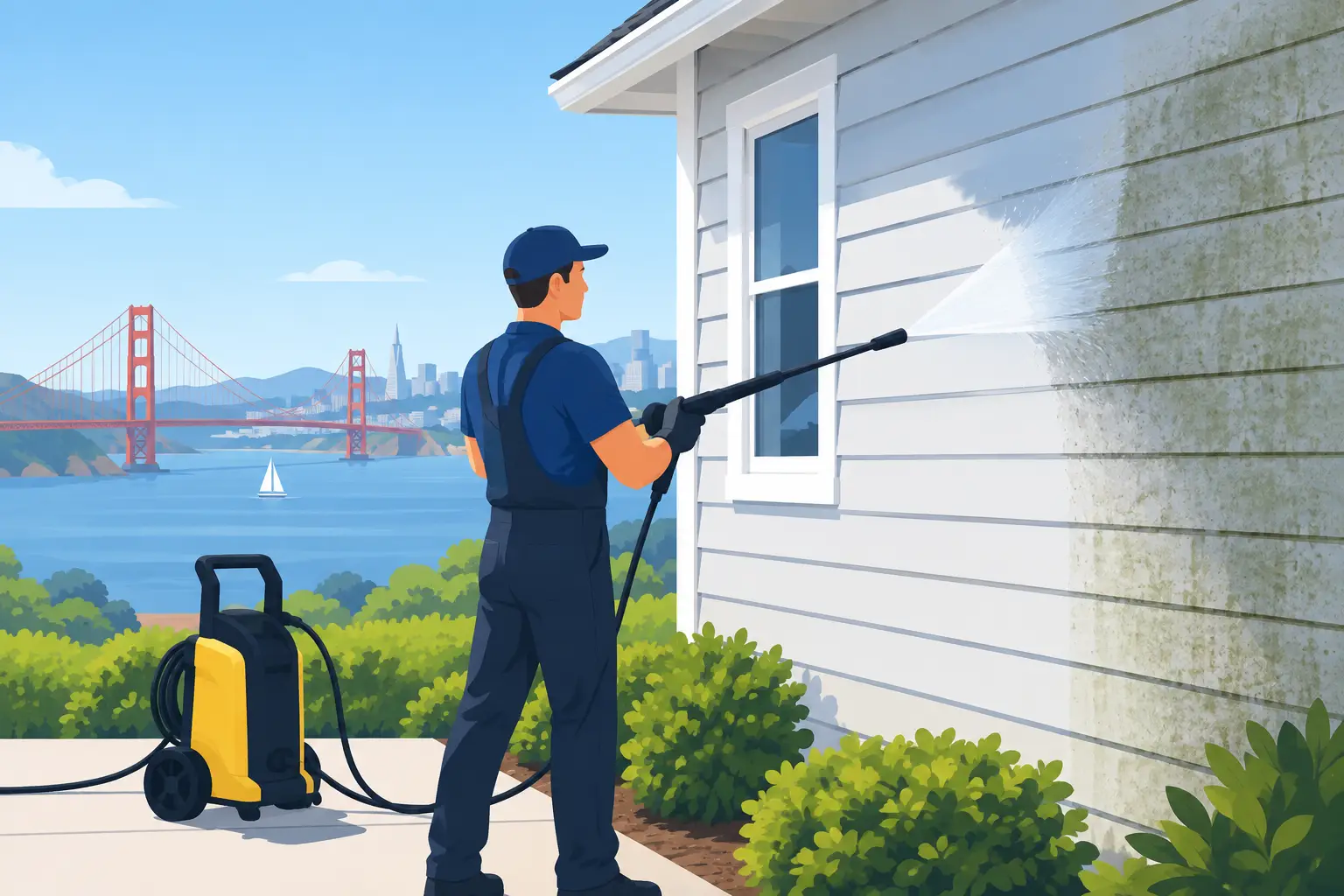
A clean exterior does more than make a home look cared for. It helps stop mold, algae, salt residue, pollen, and grime from sitting on siding long enough to stain, trap moisture, or wear down finishes. The best siding cleaning methods depend on what your home is made of, how dirty it is, and whether the surface needs a cosmetic refresh or a more careful restoration.
For Bay Area property owners, that distinction matters. Fog, coastal air, shaded landscaping, and seasonal moisture can leave siding with green growth, black streaks, and dull buildup faster than many people expect. The right process removes that contamination without forcing water behind panels, stripping paint, or damaging a delicate surface.
Start With the Siding Material, Not the Machine
Pressure washing is a powerful tool, but it is not the starting point for every siding job. The safest method begins with identifying the material and its condition. Vinyl, fiber cement, painted wood, stucco, brick, and engineered wood each respond differently to water pressure, detergents, and scrubbing.
Vinyl siding can handle a thorough wash when the pressure is controlled and the spray angle is correct. Fiber cement is durable, but damaged caulking, peeling paint, and exposed edges need attention before cleaning. Painted wood can be beautiful and long-lasting, yet high pressure may lift paint, roughen the grain, or drive moisture into seams. Stucco requires an especially measured approach because aggressive pressure can scar its textured finish or open small cracks.
A good cleaning crew checks for loose panels, failed caulk, damaged trim, cracked stucco, peeling paint, and exposed electrical fixtures before any water is applied. Cleaning can reveal existing problems, but it should never create new ones.
Soft Washing Is Often the Best Siding Cleaning Method
For most homes with organic growth, soft washing is the most effective and protective choice. This process uses low-pressure water paired with a properly diluted cleaning solution that breaks down algae, mildew, mold, pollen, and atmospheric grime. Instead of trying to blast contamination off the surface, soft washing treats it at the source and rinses it away gently.
That difference is especially valuable on painted siding, vinyl, fiber cement, and older exteriors. High pressure may make a wall look clean in the moment, but it can leave behind living spores that return quickly. A soft-wash treatment is designed to remove the visible staining and the organic growth causing it.
The solution, dwell time, and rinse method must match the surface. Too weak, and stains remain. Too strong, and landscaping, paint, window seals, or nearby materials may be at risk. Professional crews pre-wet surrounding plants, control runoff, protect sensitive areas, and rinse thoroughly. Eco-conscious products and careful application matter just as much as the equipment.
When Low-Pressure Rinsing Is Enough
Not every exterior needs a treatment-heavy wash. If siding has a light layer of dust, pollen, or dry cobwebs, a low-pressure rinse may be all that is needed. This is common after a dry Bay Area summer, particularly on homes without shade-related algae or major staining.
A low-pressure rinse works well as routine maintenance because it clears loose debris before it becomes embedded grime. It is also a sensible option for freshly painted surfaces, provided the paint has had the full curing time recommended by its manufacturer.
The trade-off is simple: rinsing removes surface dirt, but it will not reliably solve deep mildew staining, greasy pollution buildup, or active organic growth. If green or black discoloration returns soon after a rinse, the siding likely needs a targeted cleaning solution rather than more pressure.
Hand Cleaning Has a Place on Delicate Areas
Hand cleaning is slower, but it can be the right answer around fragile trim, historic wood, decorative details, oxidized vinyl, and stubborn spots near windows or entryways. Using a soft-bristle brush, mild siding-safe detergent, and controlled rinsing allows for precision where a broader wash would be too aggressive.
This method is also useful for isolated stains. For example, a small patch of bird droppings, spider-web residue, or grime under a vent may not justify treating the entire wall. Spot cleaning keeps the work focused and minimizes unnecessary exposure to moisture and detergents.
Avoid abrasive pads, wire brushes, and harsh household cleaners. They can scratch vinyl, dull painted finishes, leave streaks, or cause uneven fading. If a stain does not release with a siding-safe cleaner and gentle agitation, it may be oxidation, faded paint, rust runoff, or another issue that requires a different restoration approach.
Why High Pressure Can Damage Siding
There are times when controlled pressure helps remove heavy dirt from durable exterior materials. But the idea that more pressure equals a cleaner home is one of the biggest mistakes in exterior maintenance.
A direct high-pressure spray can force water behind vinyl laps, under trim, and into openings around windows. That moisture can reach sheathing or insulation, creating a bigger problem than the dirt you started with. On wood siding, it can gouge the surface or raise fibers. On stucco, it can leave visible wand marks and worsen weak areas. On painted surfaces, it can remove already compromised paint and expose bare material.
Technique matters, too. A trained technician keeps the spray moving, maintains an appropriate distance, selects the right nozzle, and sprays downward or across lap siding rather than upward into seams. These details protect the envelope of the building while still delivering a dramatic visual improvement.
Address Stains Based on Their Cause
Not all siding discoloration is the same, so one cleaner should not be used for every mark. Green growth is usually algae or mildew and responds well to a soft-wash treatment. Black streaking may be mold, airborne pollution, or runoff from gutters. Rust stains often come from metal fixtures, sprinkler water, or fasteners and may need a specialized rust remover. White chalky residue on older vinyl is often oxidation, which requires a gentler restoration process rather than aggressive washing.
Soot, grease, and vehicle-related grime are also common near busy streets, garages, restaurants, and commercial loading areas. These soils may require a degreaser formulated for exterior use, followed by a controlled rinse. The key is matching the chemistry to the contamination instead of applying more force.
If staining appears repeatedly in the same area, inspect the cause. Overflowing gutters, a leaking sprinkler head, dense shade, poor drainage, or vegetation pressed against the wall can keep feeding the problem. Cleaning restores the surface, but correcting the source helps it stay clean longer.
A Smart Cleaning Schedule for Bay Area Properties
Most residential siding benefits from professional cleaning every 12 to 24 months. Homes near the coast, beneath mature trees, close to high-traffic roads, or on heavily shaded lots may need annual service. Commercial properties often require more frequent cleaning because a stained facade, dirty entryway, or visible mildew affects customer perception right away.
Rather than waiting until staining is obvious, watch for early changes in color, green patches near gutters, buildup around vents, spider webs, and dull areas on the shaded sides of the building. Addressing these signs early usually means a gentler, faster cleaning process.
Property managers can benefit from scheduled exterior maintenance, especially for multi-unit buildings and storefronts. A recurring plan keeps common areas presentable, helps identify developing issues, and avoids the scramble of an overdue deep clean before inspections, tenant turnover, or a major event.
Choose a Cleaning Team That Protects the Property
The best siding cleaning methods only work when the people using them understand exterior materials. Before hiring, ask how the crew determines pressure levels, protects landscaping, handles runoff, and responds to damaged paint or loose siding found during the inspection. Licensed and insured service is not just a trust marker. It is part of responsible property care.
Look for a team that can explain the process plainly: inspect the exterior, choose the right method, protect the surrounding property, clean carefully, and walk the finished work with you. That is how siding gets clean without turning a maintenance project into a repair project.
For Bay Area homes and commercial properties, Blast Off Now Pressure Washing approaches siding as a surface worth protecting, not simply one to spray down. When grime, mold, and weather have taken over the exterior, the right cleaning method can bring back the clean, cared-for look your property deserves.