
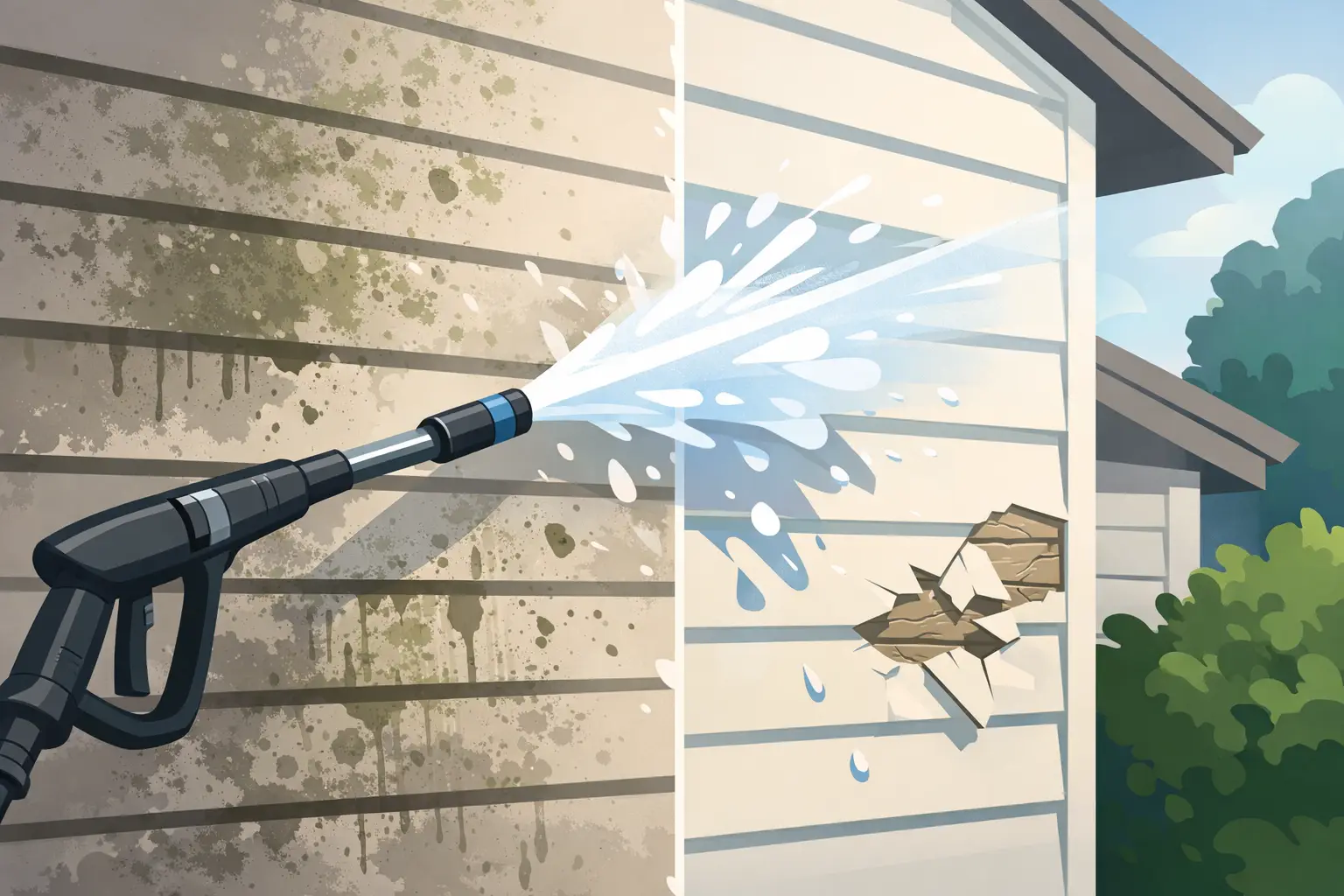
A clean exterior can make a Bay Area home look refreshed in a single afternoon. But can pressure washing damage siding? Yes, it can – when the wrong pressure, nozzle, angle, or cleaning method is used. The good news is that siding does not have to be left dirty to stay protected. The right approach removes mold, grime, pollen, and stains while respecting the material underneath.
For homeowners, landlords, and property managers, the real question is not whether exterior cleaning is safe. It is whether the cleaning method matches the siding’s condition and construction. Vinyl, fiber cement, wood, stucco, and painted surfaces all respond differently to water pressure and detergents.
How Pressure Washing Can Damage Siding
Pressure washing becomes risky when a powerful stream is treated like a universal solution. Commercial equipment is extremely effective on concrete, driveways, and heavily soiled walkways. On siding, that same force can strip paint, dent panels, drive water behind the exterior, or loosen already vulnerable sections.
Water intrusion is one of the biggest concerns. Siding is designed to shed rain that falls downward, not to withstand a concentrated spray forced upward under laps, seams, trim, vents, or window edges. Water behind siding can wet the sheathing and insulation. If it stays trapped, it may contribute to mold, wood rot, staining, or more costly repairs that are not immediately visible from the curb.
Pressure can also expose existing problems. A loose vinyl panel, brittle caulk line, failing paint, cracked wood board, or damaged trim may hold together during normal weather but fail under an aggressive wash. That does not mean cleaning caused every underlying defect, but it can turn a small maintenance issue into a visible one.
Which Siding Materials Need the Most Care?
Every exterior should be inspected before cleaning. Age, sun exposure, previous repairs, and the condition of paint or caulk matter as much as the siding material itself.
Vinyl siding
Vinyl can look dramatically better after a professional wash, especially when it has collected mildew, dust, and traffic-related grime. It is also easy to damage with excessive pressure. A narrow spray can crack older panels, knock them loose, or leave visible lines. Hot water can be a concern as well because vinyl may warp under extreme heat.
The safer method is usually low-pressure washing combined with an appropriate detergent. The cleaning solution does much of the work by breaking down organic growth, so there is no need to blast the surface clean.
Fiber cement siding
Fiber cement is durable, but it is not indestructible. High pressure can damage the painted finish, force water into gaps, and wear down exposed edges. If paint is already peeling or the caulk has failed, cleaning should be adjusted and repairs may need to come first.
A controlled soft wash is often the best choice for fiber cement. It cleans the surface without aggressively disturbing the finish that protects the boards.
Wood siding
Wood requires the most judgment. Too much pressure can gouge soft grain, splinter boards, raise the wood fibers, strip stain, or force water deep into the material. Once wood is saturated, drying time matters. Repainting, staining, or sealing too soon can trap moisture and shorten the life of the finish.
For painted or stained wood, a technician should use low pressure, test a small area, and adjust for the wood’s age and condition. Heavy oxidation, peeling paint, or dry rot should be addressed as maintenance issues, not hidden under a quick wash.
Stucco and engineered surfaces
Stucco can develop hairline cracks that allow pressurized water to enter the wall system. Older stucco, synthetic stucco systems, and patched areas need special care. Engineered siding may have manufacturer-specific cleaning recommendations, particularly when warranties are involved.
This is where a visual inspection and soft-wash process make a real difference. The goal is to remove surface contamination, not force water into every textured pore or seam.
Signs Your Siding Should Not Be Pressure Washed Yet
Cleaning is not a substitute for repairs. If the exterior has active damage, the safest move may be to fix the issue first and schedule washing afterward.
Look for loose or missing siding, wide cracks, deteriorated caulk, peeling paint, soft wood, open gaps around windows, damaged flashing, or signs of moisture inside the property. Green or black growth may simply be surface mildew, but it can also point to a drainage or ventilation issue that deserves attention.
A responsible exterior-cleaning crew does not ignore these conditions to finish a job quickly. They identify risks, explain what they see, and choose a method that protects the property. Sometimes that means skipping a compromised section until it has been repaired.
Soft Washing Is Often the Safer Answer
For most house siding, soft washing is more effective than high-pressure washing. Soft washing uses low-pressure water and carefully selected cleaning solutions to lift algae, mildew, mold, dirt, and other organic buildup. The detergent handles the cleaning action, while a gentle rinse carries contaminants away.
That difference matters. High pressure relies mainly on force. Soft washing relies on the right solution, dwell time, coverage, and controlled rinsing. It is designed for delicate residential surfaces where the finish, seams, and surrounding landscaping need protection.
Eco-safe detergents and proper dilution are part of the process. A trained technician protects plants, wets surrounding areas as needed, manages runoff, and rinses thoroughly. Strong chemicals used carelessly can discolor surfaces or harm landscaping, just as excessive pressure can damage siding.
Can Pressure Washing Damage Siding When Done Correctly?
When done correctly, pressure washing should not damage sound siding. The phrase “pressure washing” is often used broadly, but a professional service includes far more than turning on a machine. It means evaluating the surface, choosing the right cleaning chemistry, selecting the proper nozzle, controlling water flow, and keeping the spray angle away from vulnerable seams.
The safest process starts before any cleaning begins. A technician should walk the property, identify siding type, check for existing damage, and note sensitive areas such as electrical fixtures, exterior outlets, door frames, aging windows, and landscape beds. They should also consider whether the home has stubborn mold, oxidation, paint failure, or simple seasonal grime, because each issue calls for a different approach.
For Bay Area properties, that assessment is especially valuable. Coastal moisture, shade, fog, tree cover, pollen, and urban dust can all create stubborn buildup. Oakland and San Francisco homes may also have older exterior materials, tight side yards, or historic details that require careful access and low-impact cleaning.
How to Protect Your Siding Between Cleanings
Regular maintenance makes professional cleaning safer and more effective because buildup never gets a chance to become severe. Keep gutters clear so water does not overflow onto the walls. Trim branches that press against siding or keep exterior walls damp. Check sprinklers to make sure they are not repeatedly soaking one section of the home.
It also helps to inspect caulk, flashing, and paint before the rainy season. A small gap around a window or trim board is much easier to correct before moisture works behind the siding. If mildew returns rapidly in one area, look for the cause: shade, poor drainage, a leaking gutter, or limited airflow may be feeding the problem.
Most homes benefit from a cleaning schedule based on their exposure, not a one-size-fits-all calendar. A shaded property near mature trees may need attention more often than a sunny home with open airflow. Multi-unit properties and commercial buildings may need recurring service to maintain a clean appearance and protect high-traffic entrances, facades, and walkways.
Choose Cleaning That Protects the Property
A bright exterior should never come at the expense of the siding beneath it. The best results come from matching the method to the material, resolving repairs before washing, and using trained professionals who know when to lower the pressure.
Blast Off Now Pressure Washing approaches house washing as property protection, not a quick cosmetic rinse. With the right soft-wash process, your siding can look clean, fresh, and cared for without taking unnecessary risks. When grime, mold, or stains start changing how your property looks, a careful inspection is the right first step toward a lasting clean.